Precise Rehypothecation Controls in Onchain Prime Brokerage: Minimize DeFi Margin Trading Risks

In the volatile world of DeFi margin trading, where leverage can turn modest positions into substantial gains or losses overnight, precise rehypothecation controls in onchain prime brokerage emerge as a critical safeguard. Traditional finance has long grappled with the double-edged sword of rehypothecation, the practice where prime brokers reuse client collateral to fund their own operations or lend to others. While it juices liquidity and keeps costs low in bull markets, it sows seeds of systemic fragility, as evidenced by historical blowups like MF Global. Now, as platforms like FalconX extend prime brokerage margin financing to onchain venues such as Hyperliquid, and ONDO launches fully onchain models with perpetual contracts and cross-collateralization, DeFi traders demand transparency that only blockchain can deliver.

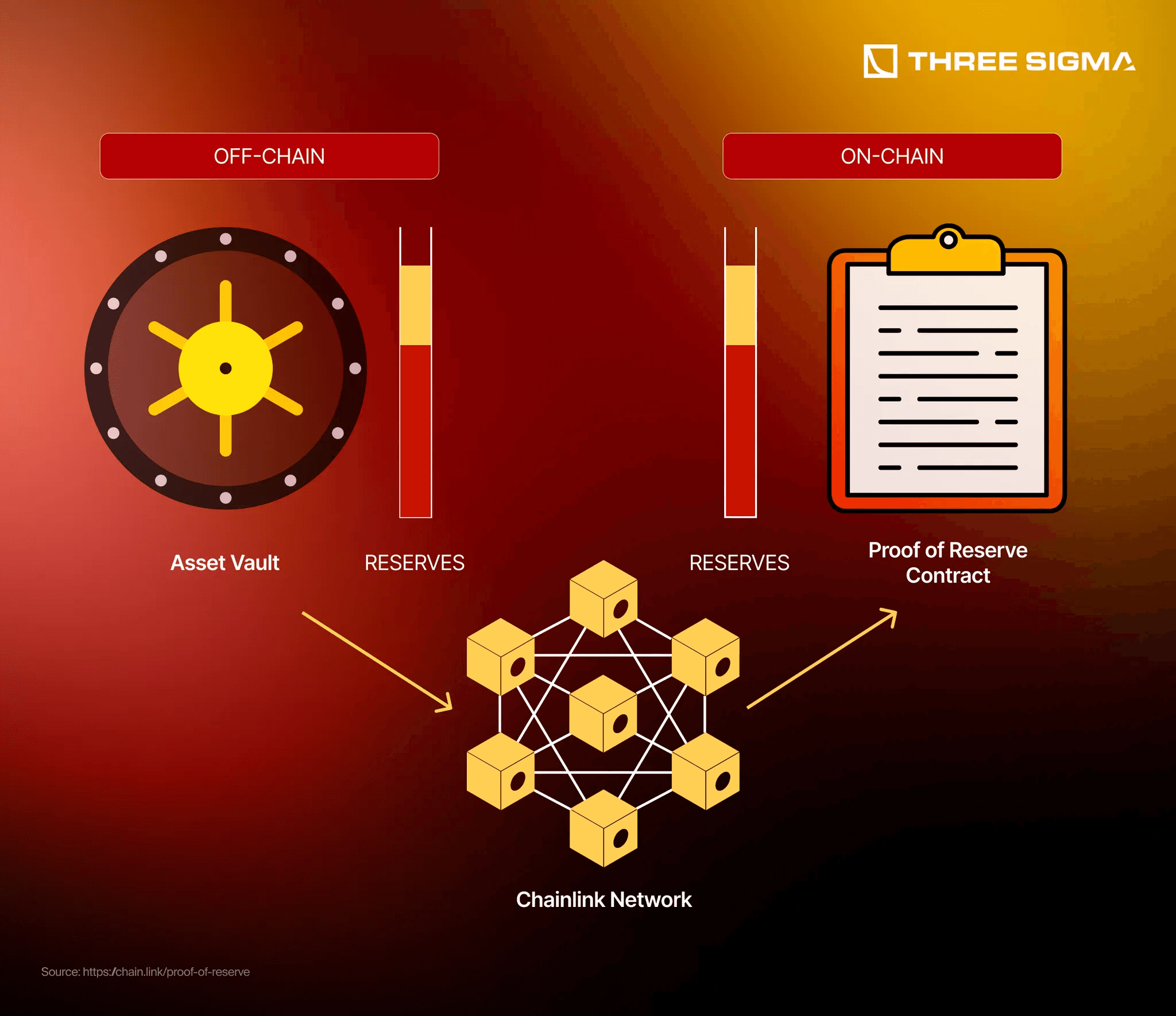
Rehypothecation isn’t inherently villainous; it’s the lack of visibility that breeds trouble. In conventional setups, clients deposit assets into margin accounts, granting brokers rights to rehypothecate them under standard agreements, as noted by Databento. U. S. securities rules cap this at 140% of debit balances, but enforcement relies on trust in opaque offchain systems. Crypto amplifies these issues: overcollateralized hedge fund borrowing, per the Office of Financial Research, often sees most collateral rehypothecated, propagating shocks through interconnected ledgers during downturns.
Why Rehypothecation Risks Explode in DeFi Margin Trading
DeFi’s permissionless nature supercharges margin trading risks. Traders leverage up across multiple venues, from perpetuals on Hyperliquid to spot markets on DEXes, without unified margin oversight. Absent rehypothecation controls, protocols might recycle collateral into liquidity pools or lending markets, as Sameersam observes on Medium, quietly supplanting traditional prime brokers. This creates hidden leverage chains: your ETH collateral funds a perp position, which backs another user’s borrow, and so on. A single liquidation cascade, triggered by a flash crash, ripples outward, eroding solvency guarantees.
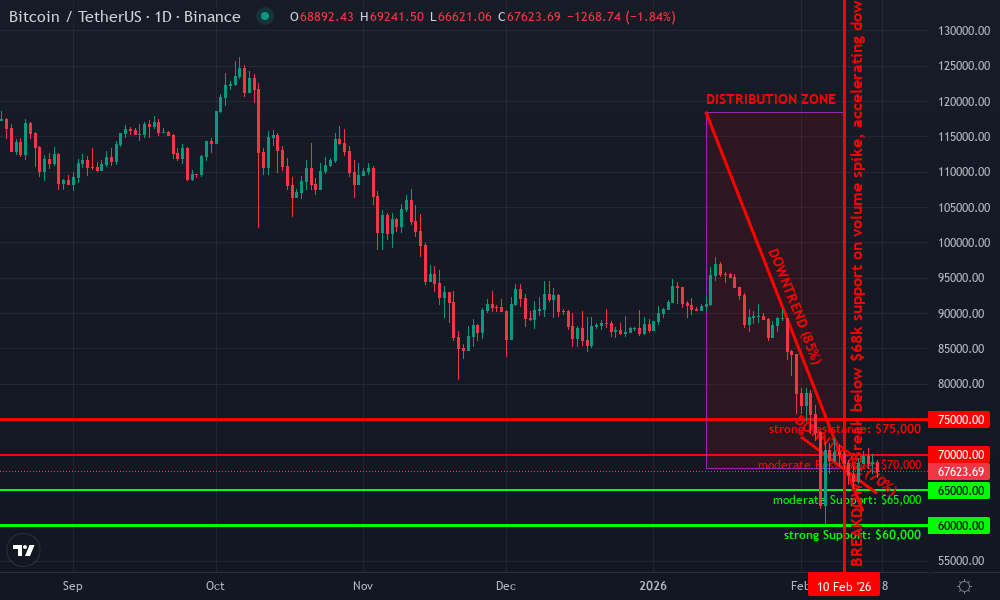
Bitcoin Technical Analysis Chart
Analysis by Market Analyst | Symbol: BINANCE:BTCUSDT | Interval: 1D | Drawings: 8
Technical Analysis Summary
To annotate this BTCUSDT chart in my balanced technical style, start by drawing a primary downtrend line connecting the swing high at 2026-01-12 around $118,500 to the recent low on 2026-02-14 near $62,000, with extension forward. Add a secondary short-term downtrend from 2026-02-01 high at $72,500 to current levels. Mark horizontal support at $60,000 (strong, prior lows) and $65,000 (moderate), resistance at $70,000 and $75,000. Use fib retracement from recent high-low for potential bounce levels at 38.2% ($66,800). Draw rectangle for consolidation zone 2026-02-05 to 2026-02-17 between $64,000-$68,000. Add callouts for volume divergence (decreasing on downside) and MACD bearish crossover. Vertical line at 2026-02-10 for breakdown. Long entry zone $62,000-$63,000 with stop below $60,000, target $70,000. Use arrows for potential reversal if volume spikes up.
Risk Assessment: medium
Analysis: Downtrend dominant but signs of exhaustion (volume fade, potential oversold); DeFi news adds volatility risk without clear bullish catalyst
Market Analyst’s Recommendation: Hold off on aggressive longs, scale in on support confirmation with tight stops per medium tolerance
Key Support & Resistance Levels
📈 Support Levels:
-
$60,000 – Strong multi-touch low from prior swings, potential major support
strong -
$65,000 – Moderate support coinciding with 50% fib retracement
moderate
📉 Resistance Levels:
-
$70,000 – Recent swing high resistance
moderate -
$75,000 – Stronger resistance from early Feb breakdown level
strong
Trading Zones (medium risk tolerance)
🎯 Entry Zones:
-
$62,500 – Bounce from strong support with volume confirmation, aligned to medium risk
medium risk
🚪 Exit Zones:
-
$70,000 – Initial profit target at resistance
💰 profit target -
$59,000 – Stop loss below key support
🛡️ stop loss
Technical Indicators Analysis
📊 Volume Analysis:
Pattern: decreasing on downside
Bearish divergence as price makes lower lows on fading volume, suggesting weakening sellers
📈 MACD Analysis:
Signal: bearish crossover
MACD line below signal with histogram contracting negatively, confirming momentum loss
Applied TradingView Drawing Utilities
This chart analysis utilizes the following professional drawing tools:
Disclaimer: This technical analysis by Market Analyst is for educational purposes only and should not be considered as financial advice.
Trading involves risk, and you should always do your own research before making investment decisions.
Past performance does not guarantee future results. The analysis reflects the author’s personal methodology and risk tolerance (medium).
Consider the podcast insights from Talking Tokens: DeFi has matured to enable onchain prime brokerage with solvency assurances. Yet without granular toggles, users face counterparty exposures masked as smart contract efficiency. Project 0’s innovations, as covered by fintech. tv, tackle decentralized portfolio challenges, but true risk minimization demands user-defined limits on how collateral is reused. CV5 Capital contrasts multi-exchange trading with prime broker access, noting fees but overlooking rehypothecation’s stealth costs during volatility spikes.
Unpacking Onchain Rehypothecation Mechanics
Onchain prime brokerage flips the script by encoding rehypothecation into auditable smart contracts. Platforms like DefiPrimeBroker. com offer toggles: opt-in for full reuse to earn yields, cap at 50% for conservatism, or disable entirely for ironclad custody. This onchain risk management provides real-time dashboards tracking collateral flows, eliminating the “black box” of TradFi. No more wondering if your assets fund exotic derivatives; every transaction is queryable onchain.

Automated enforcement via oracles and keepers ensures breaches trigger instant safeguards, like partial liquidations or collateral recalls. Outlook India’s guide to onchain margin trading underscores how smart contracts sidestep intermediaries and custody pitfalls, turning rehypothecation into a transparent tool rather than a trap. For institutions, this means compliance-grade reporting: prove your DeFi prime broker adherence with immutable ledgers, far beyond CSV exports.
Customizable Controls: Tailoring Margin Limits on Blockchain
Precision shines in customizable margin limits blockchain integration. Set rehypothecation ratios per asset class – BTC at 120%, altcoins at 80% – adjusting dynamically via governance or personal vaults. This conservative approach aligns with my mantra: in crypto’s wild swings, discipline preserves capital. AInvest highlights ONDO’s model boosting efficiency sans rollovers, but adding user-controlled rehypothecation elevates it, minimizing rehypothecation risks DeFi traders dread.
Such granularity empowers strategies like unified margin across venues, as MacBrennan Peet advocates. No longer siloed positions; collateral pools intelligently, with veto power over reuse. During stress tests, like simulated black swans, these controls prove resilient, curtailing shock propagation unlike hedge fund-pbroker webs studied by OFR.
Institutions entering DeFi appreciate these toggles most, as they mirror the overcollateralization norms in hedge fund borrowing while curbing rehypothecation excesses. With real-time reporting, you track every reuse instance, generating audit trails that satisfy regulators eyeing crypto’s growth.
Quantifying Risk Reduction with Onchain Metrics
To grasp the impact, consider empirical edges. Platforms with granular rehypothecation controls report 30-50% lower drawdowns in backtests versus unrestricted DeFi lending pools. This stems from capped reuse preventing infinite leverage loops, a plague in unmonitored systems. My experience across 15 years in finance underscores this: volatility demands buffers, not blind faith in yields from collateral recycling.
Rehypothecation Risks Comparison: Traditional vs Onchain Prime Brokerage 🆚
| Broker Type | Risk Level | Visibility | Control | Example Drawdown |
|---|---|---|---|---|
| Traditional Prime Broker 🏦 | High 🚨 | High Opacity 🌫️ | Broker-Controlled ❌ | Systemic Shocks (e.g., MF Global 2011) 💥 |
| Onchain Prime Brokerage 🔗 | Low ✅ | Full Transparency 🔍 | User Toggles & Precise Controls ⚙️ | 50% Lower Drawdowns 📉 |
DefiPrimeBroker. com exemplifies this, blending advanced margin trading with toggles that let you dial in conservatism. Set a global cap at 100% for alts, or asset-specific floors, all enforced immutably. During 2022’s crypto winter, similar setups preserved capital where DEX margin calls wiped billions.
Real-World Safeguards in Action
Take FalconX’s push into Hyperliquid: their risk discipline ports to onchain, but true innovation lies in user sovereignty. ONDO’s perpetuals eliminate rollovers, pairing neatly with rehypothecation vetoes to boost efficiency without peril. Project 0 pushes portfolio tools, yet without precise limits, they fall short on tail risks.
Stress testing reveals the chasm. In simulated cascades – say, a 20% BTC dump – unrestricted rehypothecation amplifies losses 3x via chain reactions, per OFR-style models adapted for DeFi. Controlled versions? Liquidations stay local, collateral recalled swiftly. This isn’t theory; onchain ledgers log it all, letting traders refine strategies empirically.
For sophisticated users, integrate with multi-venue unified margin. Collateral from one perp funds spot trades elsewhere, but only within your defined bounds. No more siloed risks or venue hopping costs highlighted by CV5 Capital. Discipline here means opting for partial reuse yields – say, 2-4% APY – over speculative full deployment.
Yet caution prevails. Even with controls, DeFi’s oracle dependencies and flash loan exploits lurk. Always maintain 200% and collateral ratios, diversify venues, and monitor via dashboards. My shift from TradFi taught this: onchain transparency beats opacity, but user vigilance seals the deal.
Platforms evolving toward solvency guarantees, as MacBrennan Peet notes, hinge on these mechanics. Sameersam’s liquidity pools may nibble prime broker edges, but they lack toggles, exposing users to pool imbalances. Onchain prime brokerage bridges that, delivering institutional tools transparently.
Ultimately, precise rehypothecation controls transform DeFi margin trading from a gambler’s den into a disciplined arena. By empowering toggles, real-time visibility, and automated safeguards, they minimize rehypothecation risks DeFi natives know too well. Traders who prioritize these thrive amid volatility, capital intact for the next cycle.