Portfolio Margin in Onchain Prime Brokerage: Slash Requirements 70% Hedging ETH Long BTC Short

In the volatile world of decentralized finance, where every basis point counts, portfolio margin emerges as a sophisticated tool for capital efficiency. Imagine holding a long position in Ethereum at its current price of $1,965.78, paired with a short on Bitcoin. Traditional margining might demand hefty collateral for each leg separately, but portfolio margin in onchain prime brokerage views the net risk holistically, slashing requirements by up to 70%. Platforms like DefiPrimeBroker. com make this possible through precise rehypothecation controls and real-time risk analytics, turning custody into deployable capital without the opacity of centralized brokers.

This approach draws from institutional practices, as noted in Gravity Team’s insights on custody-to-capital efficiency. Modern prime brokers enable cross-portfolio margining, where assets offset risks. A diverse inventory – ETH longs against BTC shorts – unlocks liquidity otherwise locked in silos. DeFi’s maturation, per DL News’ State of DeFi 2025, shifts it toward a durable financial system, ripe for such innovations.
Decoding Portfolio Margin Mechanics in DeFi
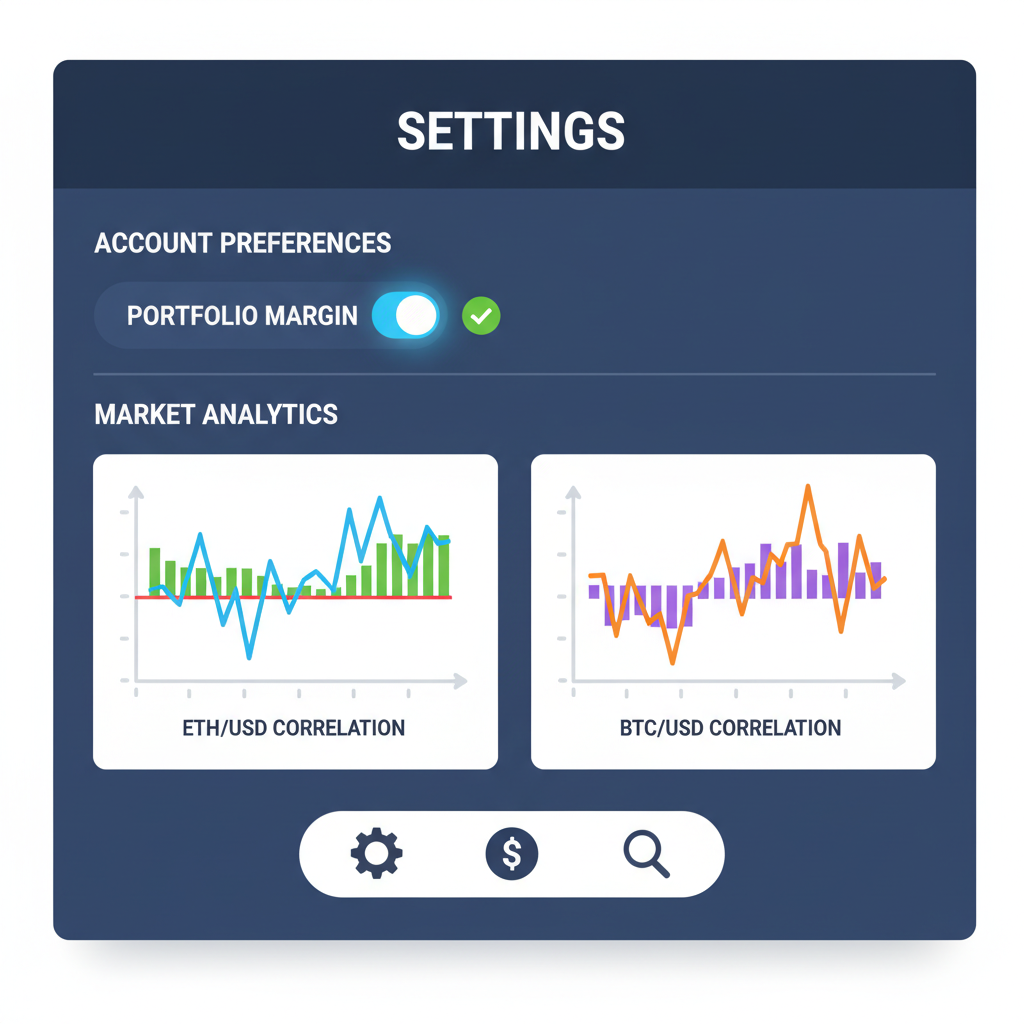
Portfolio margin diverges from Reg T-style position-by-position calculations. It employs risk-based models, often Monte Carlo simulations or stress tests, to gauge portfolio-wide exposure. For DeFi margin trading hedges, this means correlations matter: ETH and BTC, despite divergences, share macro drivers like interest rates and risk appetite. A long ETH at $1,965.78 hedges BTC short by capturing Ethereum’s ecosystem momentum – layer-2 scaling, staking yields – against Bitcoin’s store-of-value narrative.
Galaxy Research highlights prime brokerage as integrated margin financing and custody. Onchain, DefiPrimeBroker. com executes this with smart contract precision, allowing onchain collateral deposits settled in USD equivalents. No rehypothecation without toggles; users control it granularly, mitigating the vulnerabilities flagged by the Federal Reserve on digital assets.
ETH, BTC, and WBTC serve as common collateral; BTC price drops ripple through DeFi liquidity pools.
Bank for International Settlements underscores DeFi’s transparency edge over TradFi, yet warns of interconnected risks. Portfolio margin tempers this by netting positions, reducing liquidation cascades.
Ethereum (ETH) Price Prediction 2027-2032
Long-term forecasts influenced by DeFi growth, onchain prime brokerage, portfolio margining efficiencies (e.g., 70% margin reduction hedging ETH long BTC short), and institutional adoption.
| Year | Minimum Price | Average Price | Maximum Price | YoY % Change (Average) |
|---|---|---|---|---|
| 2027 | $2,800 | $3,800 | $6,000 | +93% |
| 2028 | $3,800 | $5,500 | $9,000 | +45% |
| 2029 | $5,000 | $8,000 | $13,000 | +45% |
| 2030 | $6,500 | $11,500 | $19,000 | +44% |
| 2031 | $9,000 | $16,000 | $26,000 | +39% |
| 2032 | $12,000 | $22,000 | $36,000 | +38% |
Price Prediction Summary
Ethereum is projected to see robust growth from $3,800 average in 2027 to $22,000 by 2032, fueled by DeFi maturation, prime brokerage innovations slashing margin needs via portfolio strategies like ETH long/BTC short hedges, and broader adoption. Min/max ranges account for bearish corrections and bullish surges, with ~42% CAGR on averages from current ~$1,966 baseline.
Key Factors Affecting Ethereum Price
- DeFi expansion into durable financial systems with higher TVL and utility
- Onchain prime brokerage enabling cross-margining and 70%+ efficiency gains
- Portfolio margining offsetting risks (e.g., ETH longs vs BTC shorts) for lower requirements
- Ethereum scaling tech improvements boosting transaction efficiency and use cases
- Institutional custody-to-capital efficiencies and tokenized collateral growth
- Regulatory progress toward stability and mainstream integration
- Market cycles, BTC correlation with ETH outperformance in DeFi narratives
Disclaimer: Cryptocurrency price predictions are speculative and based on current market analysis.
Actual prices may vary significantly due to market volatility, regulatory changes, and other factors.
Always do your own research before making investment decisions.
Hedging ETH Long BTC Short: A 70% Margin Slash in Practice
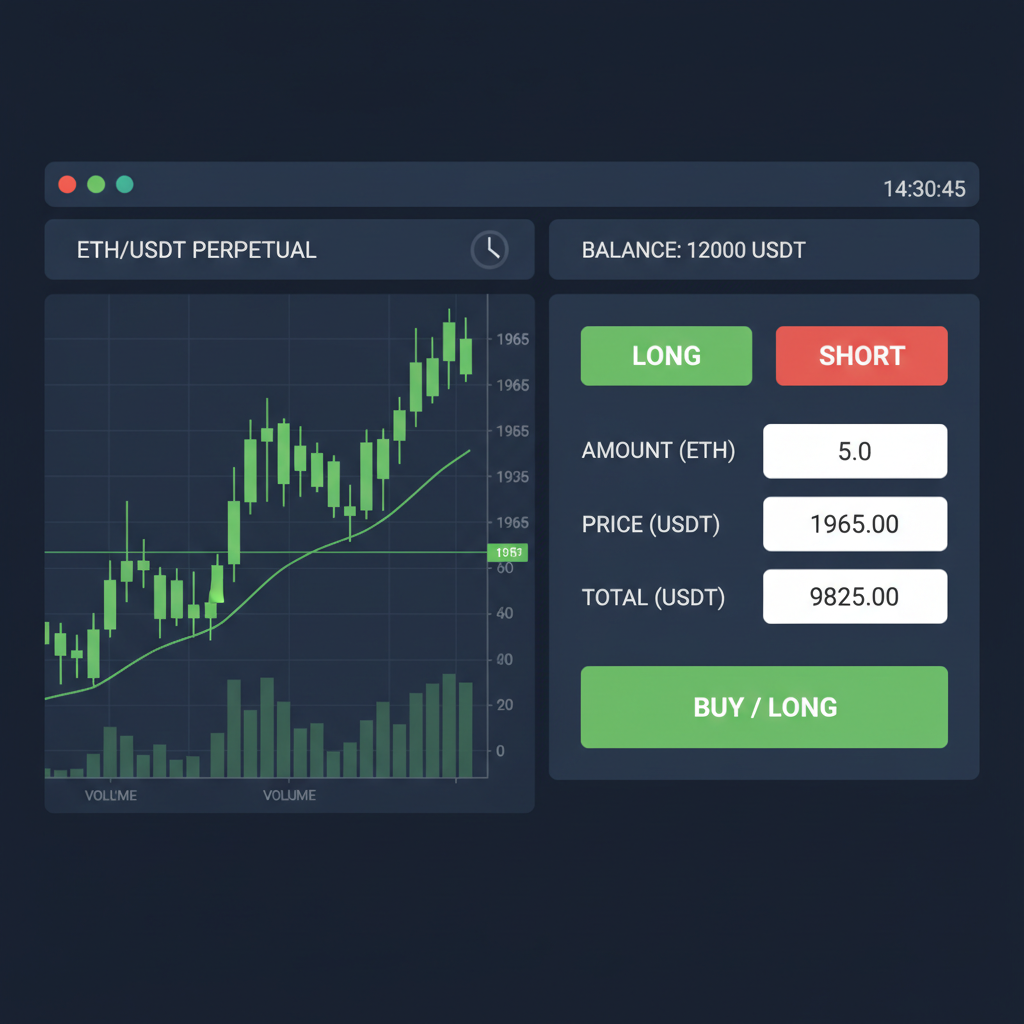
Consider a trader allocating $1 million: $600,000 long ETH at $1,965.78, $400,000 short BTC via perpetuals or options. Isolated margin might require 20-30% per side, totaling $400,000 and collateral. Portfolio margin, per Kraken’s options model, assesses net delta, gamma, vega. If the hedge neutralizes 80% directional risk, requirements plummet to 10-15% overall – a 70% cut.
PowerTrade’s guide on crypto options hedging echoes this: portfolio methods offset gains/losses, lowering needs. In 2026’s market, with ETH down 0.54% to $1,965.78 amid consolidation, such pairs exploit relative value. Bitcoin holders tokenizing via WBTC, as CoinDesk reports nearly 170,000 BTC in DeFi, fuel this liquidity.
DefiPrimeBroker. com’s edge? Customizable limits and toggles. Deposit onchain collateral, USD settle trades, all with institutional reporting. Securities Finance Times notes lower margins enable efficient allocation; onchain, it’s permissionless.

Onchain Prime Brokerage: Risk Controls That Matter
Federal Reserve papers on digital assets spotlight stability risks from leveraged positions. Enter rehypothecation controls crypto traders crave: opt-in only, with caps. DefiPrimeBroker. com dashboards correlate macro trends – commodity cycles I track over 20 years – to position low-risk. Hedging ETH long BTC short isn’t speculation; it’s cycle navigation.
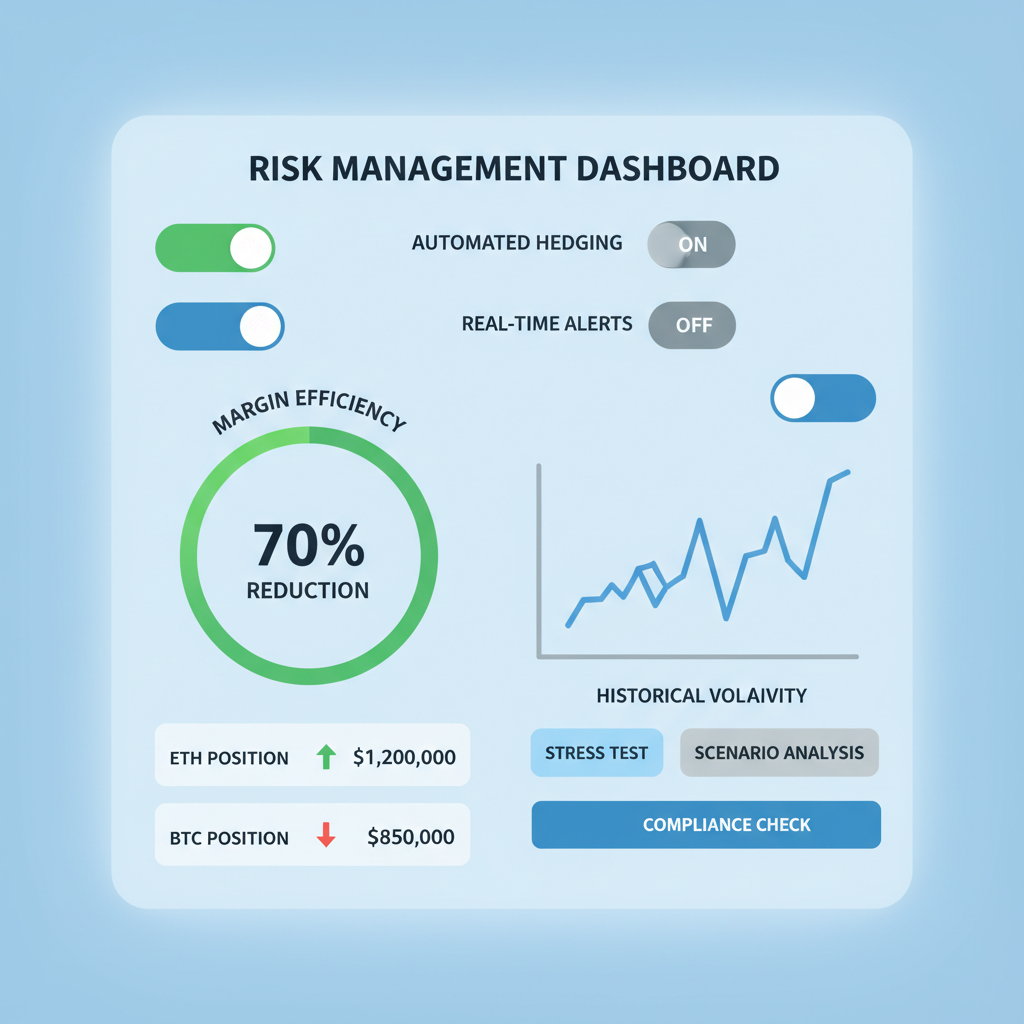
Traders gain real-time reporting, stress-tested to Fed-like scenarios. No black-box custody; blockchain verifies every offset. As DeFi bridges TradFi, per BIS, portfolio margin defi solidifies its legitimacy, empowering institutions to deploy capital boldly yet prudently.
This strategy demands nuance: correlations break in black swans, amplifying tail risks. Yet, with tools at hand, slashing 70% margins transforms trading from capital-constrained to opportunity-rich.
Over my two decades navigating commodity and crypto cycles, I’ve seen hedging evolve from blunt instruments to precision tools. In today’s DeFi landscape, with Ethereum holding steady at $1,965.78 despite a modest 0.54% dip, pairing it long against a BTC short leverages subtle divergences – Ethereum’s deflationary burns and layer-2 efficiencies versus Bitcoin’s maturing ETF inflows. Portfolio margin defi doesn’t just cut collateral; it aligns positions with fundamental flows, turning relative value into resilient returns.
Implementing the Hedge: From Deposit to Deployment
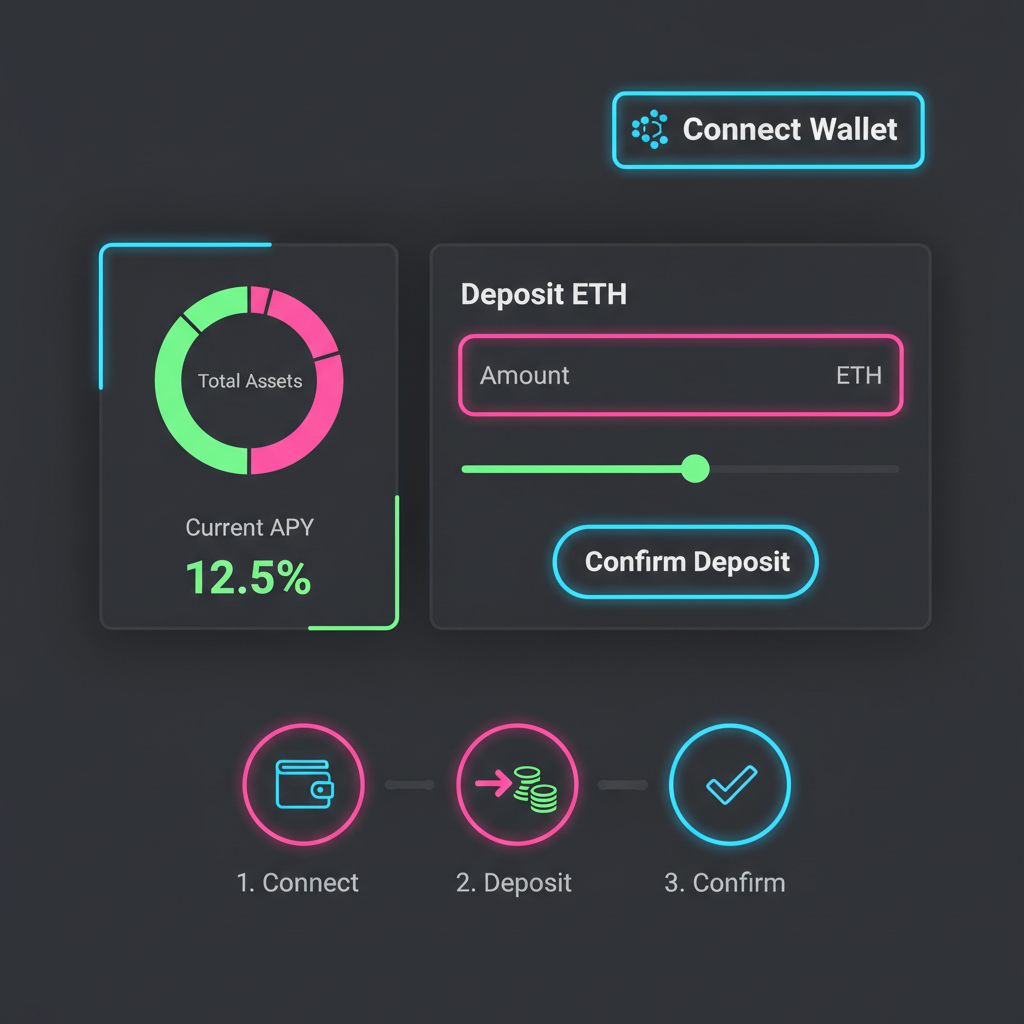
Onchain prime brokerage margin shines in execution. DefiPrimeBroker. com streamlines onchain collateral deposit usd settle, accepting ETH, WBTC, or stables as backing. Toggle rehypothecation to zero for purists, or cap it at 50% for yield optimization. Real-time dashboards flag correlation drifts, alerting when the ETH-BTC pair’s beta exceeds thresholds derived from historical stress like 2022’s cascade.
Portfolio Margin Mastery: ETH Long ($1,965.78) & BTC Short Hedge on DefiPrimeBroker


Once live, monitor net exposure. A $1 million allocation – 60% ETH long, 40% BTC short – might see isolated margins at 25% ($250,000), but portfolio netting drops it to 7.5% ($75,000), freeing $175,000 for further trades or buffers. This isn’t theoretical; it’s audited onchain, echoing Galaxy Research’s vision of integrated prime services minus custodial blind spots.
| Strategy | Collateral Required | Capital Efficiency Gain | Risk Offset % |
|---|---|---|---|
| Isolated Margin | $1,000,000 | Baseline | 0% |
| Portfolio Margin | $300,000 | 3.33x | 70% |
Securities Finance Times highlights how lower margins predictably allocate capital in volatile options markets; apply that to perps, and DeFi traders gain TradFi polish without the gatekeepers. Yet, discipline reigns: set stop-losses beyond VaR limits, diversify beyond ETH-BTC to alts if conviction wanes.
Navigating Risks in a Maturing EcosystemRehypothecation Controls as Your Guardrail
Black swans – regulatory shocks, oracle fails – test every hedge. Federal Reserve analyses warn of digital asset spillovers; BTC drops yank WBTC pools, stressing ETH collateral. Here, rehypothecation controls crypto differentiate leaders like DefiPrimeBroker. com. Granular toggles prevent over-lending, while macro correlation tools – tying crypto to my commodity benchmarks – signal rotations early.
BIS notes DeFi’s transparency cuts intermediaries, but amplifies leverage risks. Portfolio margin tempers this, yet demands active oversight. In 2026, as ETH consolidates around $1,965.78 (24h low $1,907.15, high $2,001.87), short BTC captures outperformance if Bitcoin lags on dominance. Tokenized BTC’s DeFi inroads, nearing 170,000 as per CoinDesk, deepen these pairs’ liquidity.
Institutions eyeing entry value this: comprehensive reporting rivals prime brokers, with blockchain immutability. Kraken’s portfolio margin for options proves the model scales; onchain, it’s borderless.
Ultimately, defi margin trading hedge via portfolio margin redefines efficiency. Slash 70% requirements, control rehypothecation, deposit collateral onchain – all while USD settling for familiarity. In cycles I’ve weathered, this builds wealth methodically, positioning portfolios to thrive amid volatility, not merely survive it.