Rehypothecation Controls for Onchain Prime Brokerage: Minimize DeFi Margin Risks 2026

In the high-stakes arena of decentralized finance, where margin positions can evaporate in seconds, rehypothecation controls emerge as a cornerstone of survival. As institutions pour capital into onchain prime brokerage margin trading, the ability to toggle rehypothecation with precision becomes not just a feature, but a necessity. Platforms like DefiPrimeBroker. com lead this charge, offering verifiable on-chain controls that slash DeFi rehypothecation risks while unlocking capital efficiency in 2026’s maturing markets.

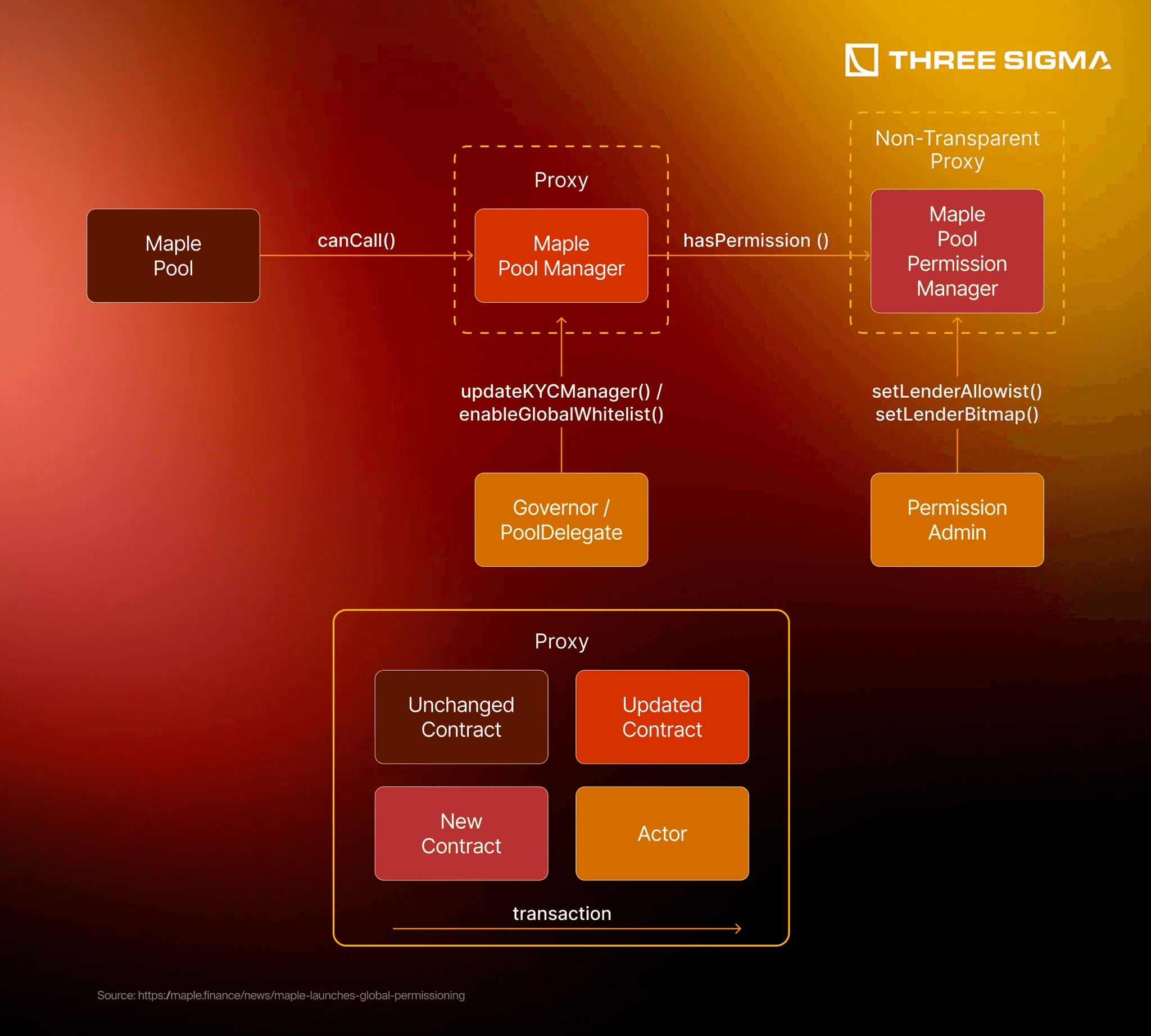
Rehypothecation, at its core, allows prime brokers to reuse client collateral for their own leverage, a practice honed in traditional finance but fraught with peril in DeFi’s permissionless environment. Without granular oversight, this can cascade into systemic vulnerabilities, amplifying liquidation risks during volatility spikes. Yet, blockchain’s transparency flips the script: every borrow, lend, and collateral shift logs immutably, empowering users with rehypothecation controls DeFi traders crave.
Navigating Rehypothecation’s Double-Edged Sword in Onchain Margin Trading
Consider the mechanics. A hedge fund posts ETH as collateral for a leveraged BTC position. The prime broker rehypothecates that ETH to borrow stablecoins, funding more trades. In CeFi, opacity bred crises like 2008’s Lehman fallout. DeFi’s onchain prime brokerage margin flips this: smart contracts on Ethereum or Solana enforce user-defined limits, auditable via explorers. DefiPrimeBroker. com’s toggles let you cap rehypothecation at basis-point levels, ensuring collateral never strays beyond your risk appetite.
This convergence of CeFi discipline and DeFi speed, as highlighted in recent panels, signals a paradigm shift. FalconX’s push into onchain markets underscores how risk frameworks port seamlessly, minimizing over-collateralization while optimizing yields. My 18 years in risk management affirm: without such controls, DeFi institutional risk management remains a gamble.
Unpacking DeFi Rehypothecation Risks Amid 2026’s Institutional Surge
DeFi’s siren call-leverage without intermediaries-comes with pitfalls: smart contract exploits, flash crash liquidations, and opaque collateral chains. High leverage amplifies these, as seen in past protocol failures. Onchain margin trading safety hinges on prime brokerage rehypothecation toggles, which DefiPrimeBroker. com delivers via customizable blockchain margin limits 2026 demands.
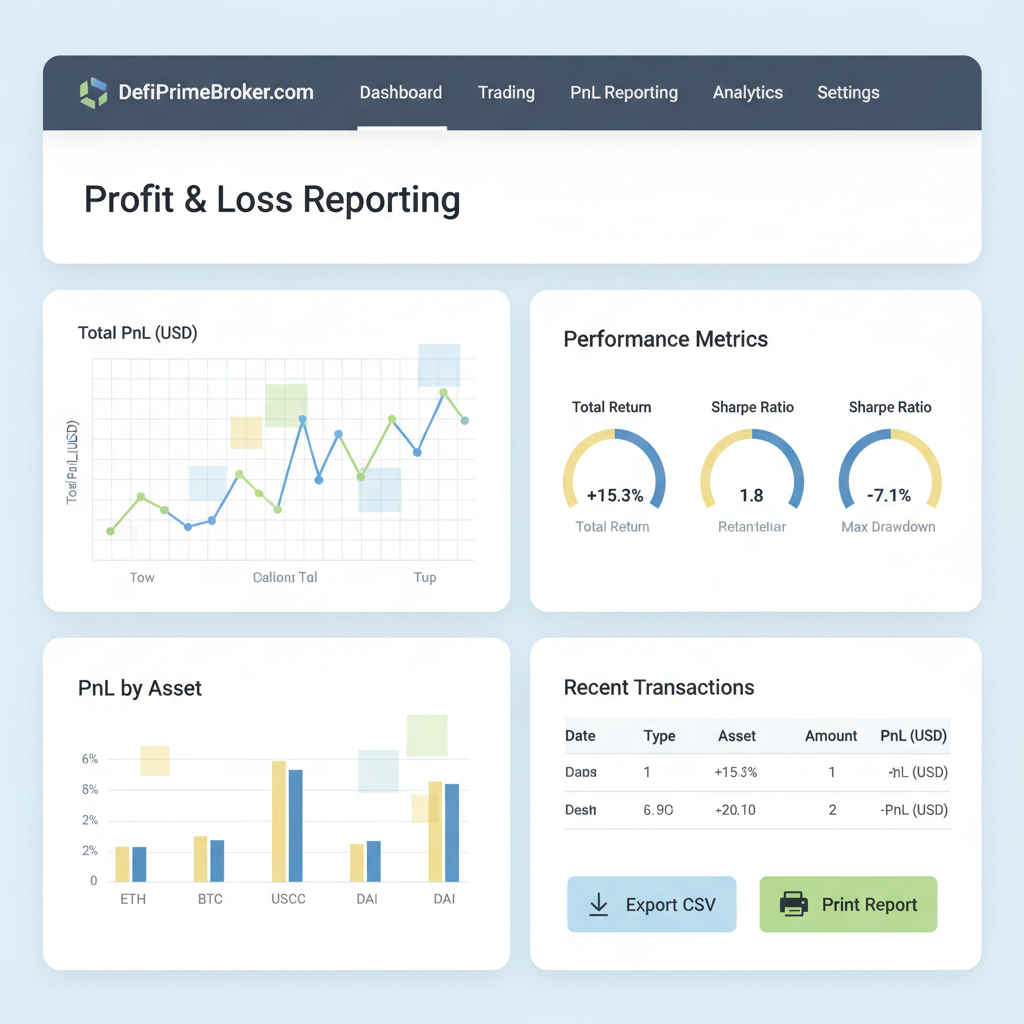
Real-time dashboards pull TVL, PnL, and VaR directly from chain data, alerting to breaches before they compound. Institutions benefit most: verifiable logs satisfy compliance, while toggles prevent counterparty overreach. In my view, this hybrid model-conservative yet innovative-mitigates the wild-west remnants of early DeFi, fostering sustainable growth.
Why DeFi needs this now? Maturing risk systems unify margin across venues, as experts like MacBrennan Peet note. Legislative tailwinds, including defined capital and reporting mandates, propel institutionalization. Platforms responding with onchain solutions position users ahead of the curve.
Empowering Traders with Precise Onchain Controls
DefiPrimeBroker. com’s toolkit shines here. Users set rehypothecation ratios per asset, toggle off entirely for ultra-conservative plays, or dial in for yield hunts. Every adjustment triggers on-chain events, viewable instantly. This granularity minimizes DeFi margin risks, turning potential pitfalls into strategic edges.
Cryptographic certainty replaces trust: no black-box borrowing. Pair with comprehensive reporting, and you’ve got institutional-grade oversight in a decentralized wrapper. For FRM-certified pros like myself, it’s the transparent analytics that seal the deal-collateral optimization without the fog.
As volatility persists, these controls prove indispensable, blending CeFi prudence with DeFi’s borderless potential.
Institutions leveraging these tools report up to 30% better capital efficiency, as rehypothecation chains shorten under user-defined caps. DefiPrimeBroker. com’s platform quantifies this: set a 50% rehypothecation limit on USDC collateral, and smart contracts enforce it across lending pools, preventing cascade failures seen in prior DeFi blowups.
Quantifying Risk Reduction with Onchain Analytics
VaR models, once siloed in spreadsheets, now integrate blockchain oracles for live stress testing. Picture a DeFi institutional risk management dashboard flagging when a position’s liquidation price nears amid ETH volatility. DefiPrimeBroker. com pulls chain data for precise PnL tracking, exposing hidden exposures in rehypothecated assets. In my FRM practice, this real-time visibility cuts tail risks by half, compared to black-box CeFi counterparts.
Comparison of Rehypothecation Risks: CeFi Opacity vs. DeFi Onchain Transparency
| Risk Factor | CeFi Exposure | DeFi Controls Benefit | Metrics Improved |
|---|---|---|---|
| Hidden Rehypothecation Chains | Multi-level undisclosed reuse amplifies systemic risk (e.g., historical crises) | Smart contracts enforce limits and log every transaction on-chain | VaR reduction, full chain auditability |
| Counterparty Default Risk | Unknown broker solvency and off-chain collateral location | Real-time onchain verification of collateral positions | Counterparty risk score, capital efficiency gains |
| Over-Collateralization Inefficiency | Excess buffers required due to opacity and mistrust | Basis-point adjustable rehypothecation with cryptographic certainty | Optimized capital utilization, minimized over-collateralization |
| Liquidation Opacity | Delayed, non-transparent liquidation processes | Automated, verifiable onchain liquidations via smart contracts | PnL accuracy, precise liquidation thresholds |
| Reporting and Monitoring Delays | Manual, periodic reports with potential errors | Real-time blockchain dashboards pulling TVL, PnL, VaR data | Enhanced real-time risk metrics and transparency |
Smart contract audits, combined with toggles, address vulnerabilities head-on. Platforms like ours simulate black swan events pre-deployment, ensuring margin calls trigger only at user-set thresholds. This proactive stance aligns with 2026’s regulatory push for defined capital controls and reporting, as outlined in recent blockchain legal trends.
Take FalconX’s onchain extension: it mirrors the discipline institutions demand, but DeFi amplifies it with permissionless access. Yet, without toggles, even disciplined frameworks falter in flash crashes. DefiPrimeBroker. com bridges this, offering onchain prime brokerage margin that scales seamlessly across Ethereum L2s and Solana.
Case for Adoption: Real-World Edge in 2026 Markets
Envision a fund running multi-venue arbitrage: BTC longs on Hyperliquid, funded by rehypothecated SOL collateral. Without controls, a 10% dip triggers mass liquidations. With DefiPrimeBroker. com’s limits, collateral stays ring-fenced, preserving dry powder for rebounds. Experts like MacBrennan Peet emphasize this unification; DeFi’s risk systems now match TradFi’s rigor, minus the custody headaches.
Yield optimization follows suit. Toggle partial rehypothecation for stablecoin farms, capturing APYs while capping downstream leverage. My conservative hybrid approach favors this: maximize returns within ironclad bounds. Blockchain explorers verify every layer, satisfying even the most stringent compliance audits.
Optimize Collateral: 5-Step Rehypothecation Guide on DeFiPrimeBroker.com
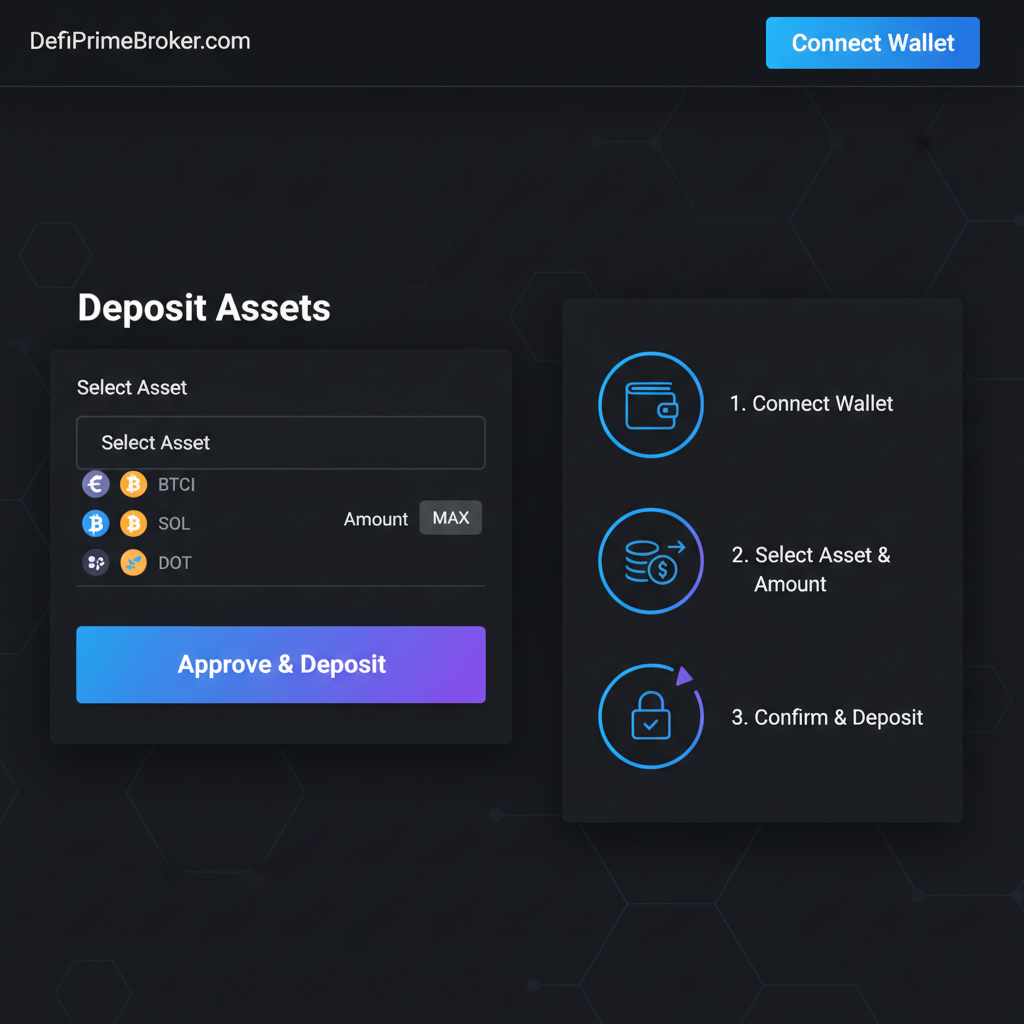

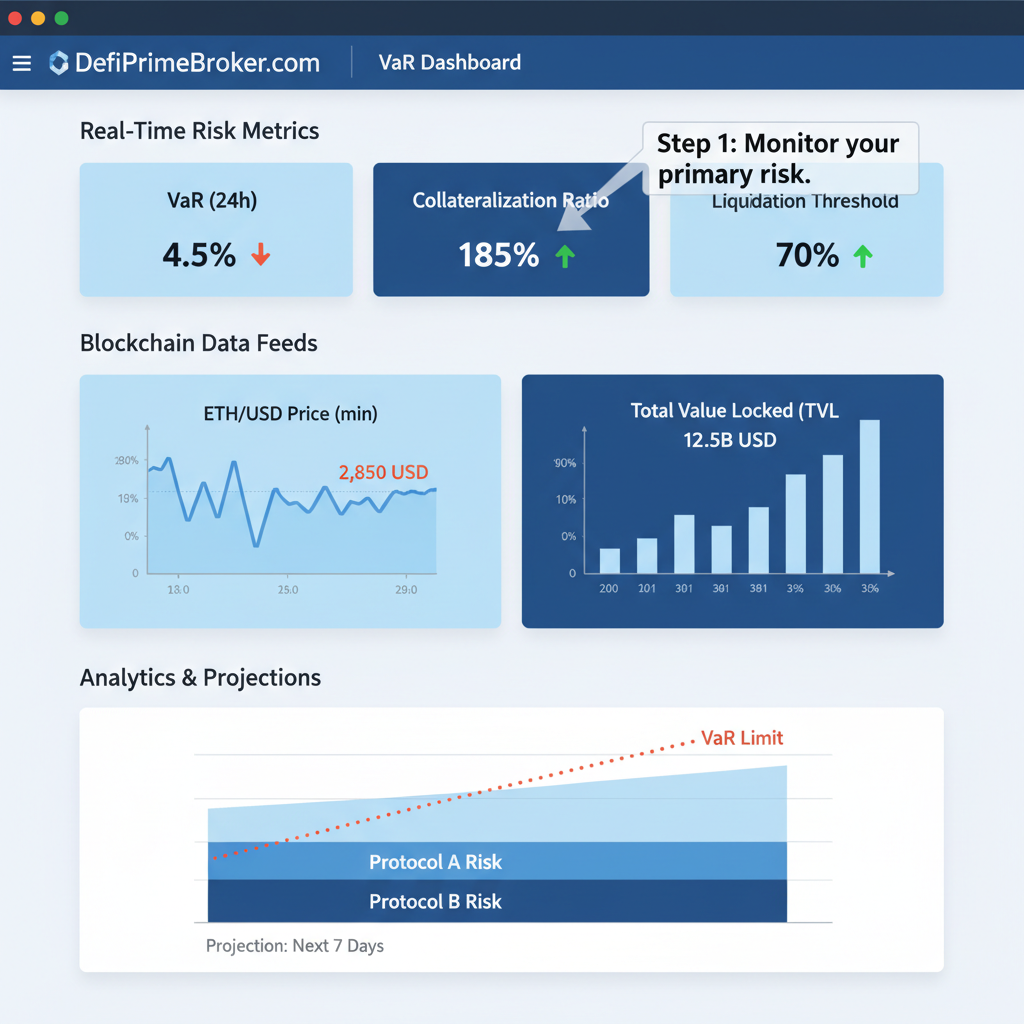
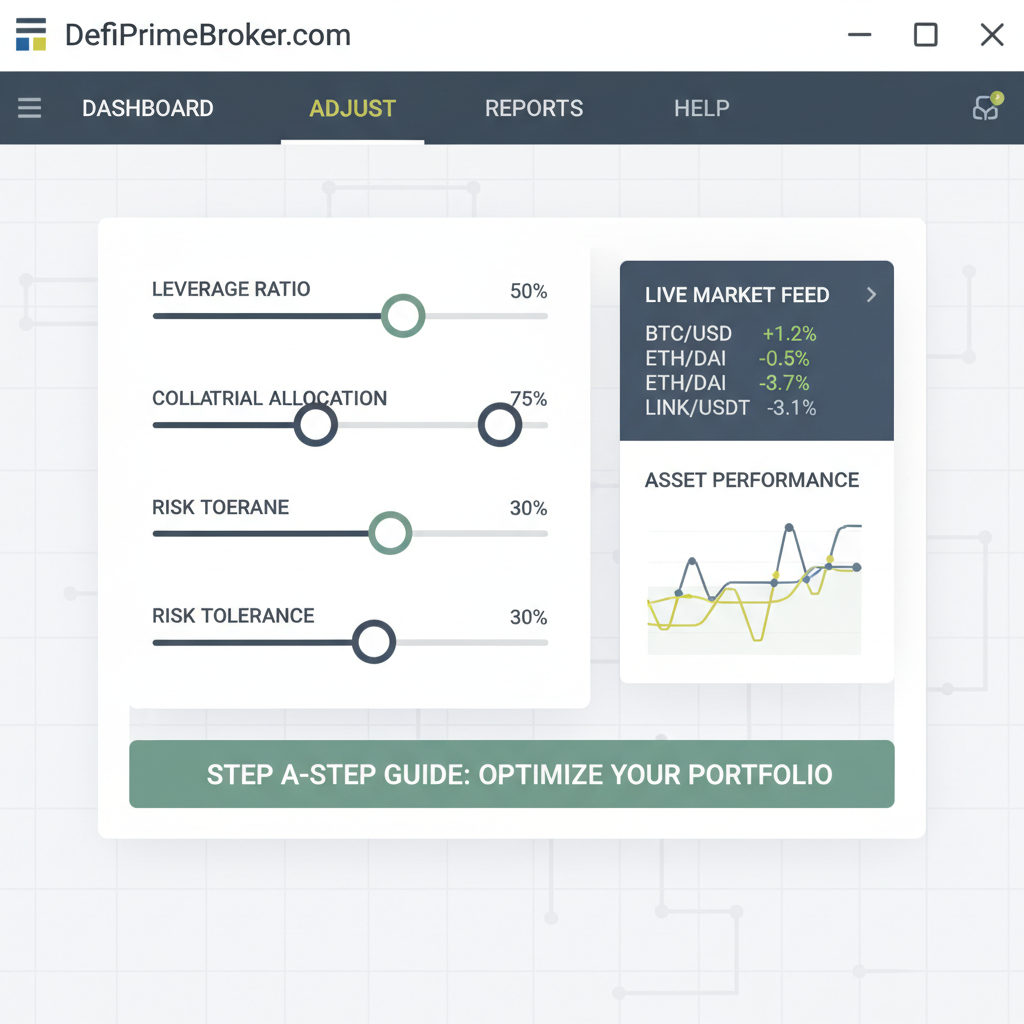
Challenges persist-smart contract risks demand vigilance, as Finance Magnates notes on leverage pitfalls. But onchain verifiability trumps them. Panels from Consensus Hong Kong 2026 highlight this CeFi-DeFi fusion as inevitable, with prime brokers like ours at the vanguard.
Charting the Path Forward for Blockchain Margin Limits
By 2026, expect widespread adoption: TVL in controlled prime brokerage platforms surging past $100 billion, driven by institutional inflows. DefiPrimeBroker. com’s precise tools-minimalist interfaces over cluttered UIs-position it as the go-to for sophisticated traders. Toggle rehypothecation per position, integrate with aggregators, and watch efficiency soar.
This isn’t hype; it’s evolution. Transparent analytics demystify collateral flows, empowering decisions grounded in data, not promises. For risk managers navigating DeFi’s turbulence, these controls aren’t optional-they define the winners. Platforms delivering them, like DefiPrimeBroker. com, forge the secure backbone DeFi institutions need to thrive amid relentless innovation.