
The shift to on-chain prime services
Prime brokerage has long been the gatekeeper of institutional liquidity. For decades, the function was monopolized by large banks that offered lending, clearing, and settlement for complex portfolios. Today, that infrastructure is moving on-chain. The 2026 market context is defined by a transition from opaque, balance-sheet-heavy models to transparent, DeFi-native protocols that prioritize speed and capital efficiency.
This shift is not merely about moving trades to a blockchain; it is about redefining how institutions access liquidity. Traditional prime brokers act as intermediaries, often introducing friction and counterparty risk. DeFi-native infrastructure removes the middleman, allowing institutions to interact directly with liquidity pools and lending protocols. This change is critical for firms seeking to reduce costs and increase transparency in their trading operations.
The entry of regulated entities into this space has accelerated the adoption of on-chain prime services. Ripple's acquisition of Hidden Road to create Ripple Prime marks a significant milestone, demonstrating that major financial players are building global, multi-asset prime brokerage platforms owned by crypto companies. This move signals a maturation of the market, where regulated clearing for derivatives and other complex instruments is becoming standard practice.
To understand the scale of this transition, it helps to look at the broader market dynamics. The following chart illustrates the current state of the institutional crypto market, reflecting the growing integration of traditional finance with decentralized protocols.
The evolution of prime brokerage in DeFi is about more than just technology; it is about creating a more accessible and efficient financial system. As institutions continue to adopt these on-chain services, the lines between traditional finance and decentralized finance will continue to blur, leading to a more integrated and robust global financial ecosystem.
Key players in the 2026 market
The DeFi prime brokerage landscape in 2026 has consolidated around a few specialized infrastructure providers. These firms bridge the gap between institutional capital and on-chain liquidity, offering services that were previously impossible in decentralized finance. The dominant players—FalconX, Ripple Prime, and August Digital—each address distinct institutional needs, from margin financing to cross-margining and smart contract security.
FalconX: DeFi Margin Financing
FalconX has expanded its traditional prime brokerage capabilities into the DeFi space with a focus on leverage. The firm introduced a Prime Brokerage Financing solution for Hyperliquid, allowing institutional clients to access up to 5x leverage on one of the leading DeFi derivatives venues [[src-serp-1]]. This move integrates off-chain credit lines with on-chain execution, providing a familiar risk management layer for traditional finance firms entering decentralized markets.
Ripple Prime: Cross-Margining Access
Ripple Prime focuses on simplifying access to institutional DeFi derivatives. By integrating Hyperliquid support, Ripple Prime enables its clients to access on-chain derivatives liquidity with cross-margining capabilities [[src-serp-5]]. This approach allows institutions to manage risk across multiple positions more efficiently, reducing the capital inefficiencies that often deter large-scale participation in decentralized exchanges.
August Digital: Secure On-Chain Infrastructure
August Digital provides the underlying infrastructure for on-chain prime brokerage, emphasizing security and sophisticated risk engines. Their platform offers secure smart contract accounts and advanced pricing mechanisms tailored for institutional traders [[src-serp-6]]. By abstracting the complexities of wallet management and smart contract interactions, August Digital allows institutions to focus on trading strategies rather than technical implementation.
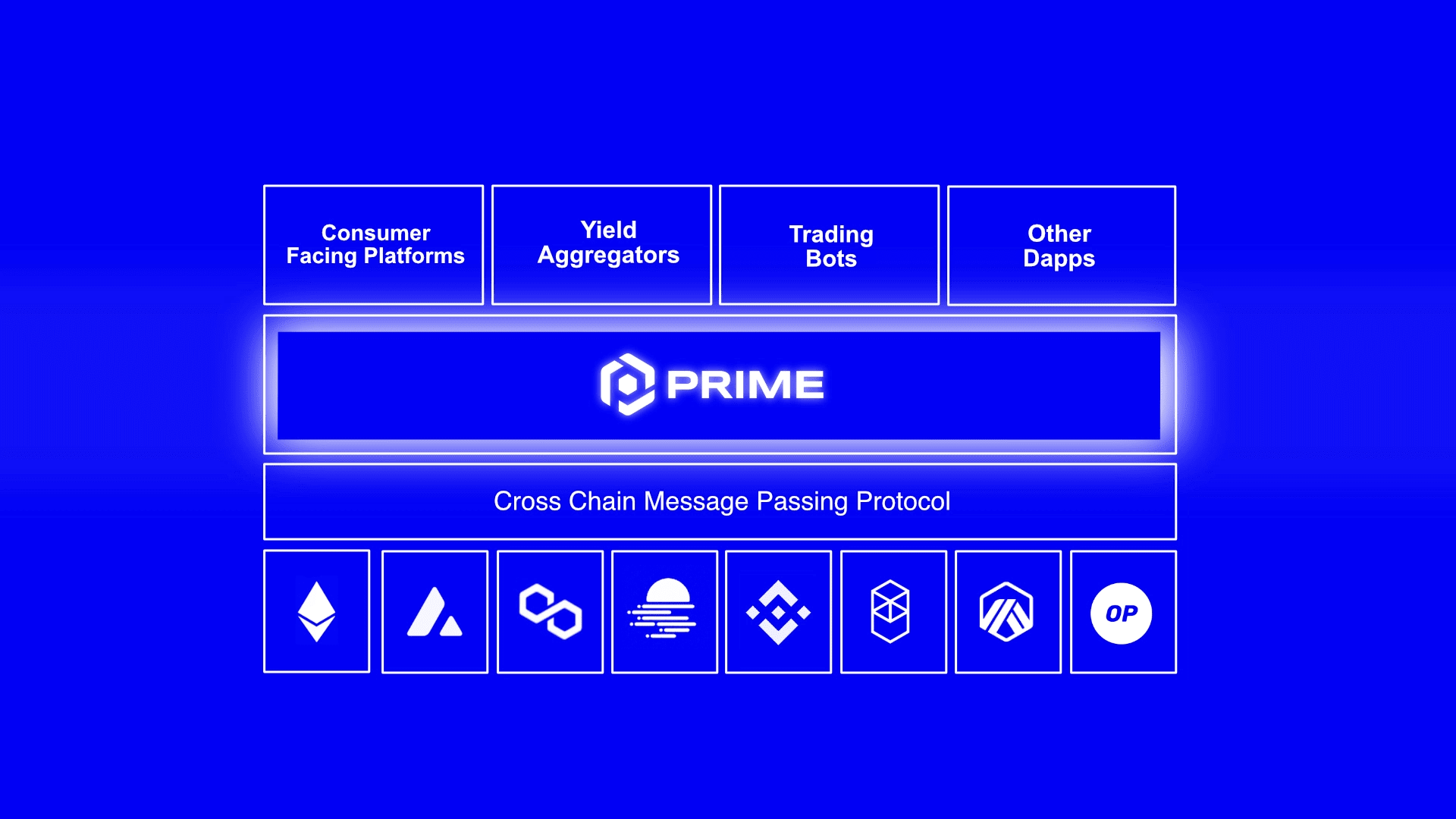
Comparison of Prime Brokerage Features
The following table compares the core features of these three key providers to help institutions evaluate which infrastructure best fits their risk and liquidity requirements.
| Provider | Key Feature | Target Venue |
|---|---|---|
| FalconX | Margin Financing | Hyperliquid |
| Ripple Prime | Cross-Margining | Hyperliquid |
| August Digital | Smart Contract Security | Multi-Chain |
AI-driven risk and margin controls
Institutional DeFi prime brokerage relies on AI-driven risk engines to manage counterparty exposure in real time. Unlike traditional finance, where margin calls often lag behind market moves, on-chain systems can adjust collateral requirements instantly as asset volatility shifts. This speed is essential for preventing cascading liquidations that threaten systemic stability across interconnected lending protocols.
Platforms like August Prime Brokerage deploy sophisticated risk engines that monitor on-chain positions continuously. These systems analyze complex data streams—trading volume, liquidity depth, and oracle prices—to calculate dynamic margin requirements. By automating these calculations, institutions can maintain high leverage without exposing the entire ecosystem to sudden insolvency events.
The integration of advanced derivatives platforms further refines this risk management. Ripple Prime’s support for Hyperliquid, for example, enables institutional clients to access on-chain derivatives with cross-margining capabilities. This means that gains in one position can offset losses in another, reducing the overall margin required to maintain a portfolio. Such cross-margining efficiency allows large funds to deploy capital more effectively while keeping risk parameters tightly controlled by AI algorithms.
Regulatory compliance and custody
Institutional adoption of DeFi prime brokerage in 2026 hinges on two non-negotiable pillars: regulatory clarity and institutional-grade custody. Traditional finance requires a clear legal framework to manage risk, and decentralized finance is no exception. The convergence of DeFi and CeFi is driven by the need for regulated clearing mechanisms that satisfy compliance officers and auditors. Without these foundations, large-scale capital remains on the sidelines.
Regulated clearing and derivatives
Prime brokerage services, once the exclusive domain of major banks, are evolving to bring institutions into DeFi through regulated clearing for derivatives. This shift allows institutional players to hedge exposure and manage leverage within a compliant environment. The integration of on-chain finance with traditional regulatory standards creates a hybrid model that prioritizes transparency and auditability. This structure reduces counterparty risk, a primary concern for institutional investors entering the crypto space.
Custody solutions for institutional capital
Secure custody is the bedrock of institutional participation. In 2026, prime brokers offer multi-signature wallets, hardware security modules, and segregated asset structures that meet traditional finance standards. These solutions ensure that digital assets are protected against theft and mismanagement while maintaining the liquidity required for prime brokerage operations. The emphasis is on providing a familiar security infrastructure that allows institutions to allocate capital with confidence.
Market context
The underlying asset volatility remains a key factor in custody and regulatory strategy. Institutional prime brokers must navigate these fluctuations while maintaining strict compliance protocols.
No comments yet. Be the first to share your thoughts!