

In the evolving landscape of decentralized finance, onchain prime brokerage emerges as a strategic pivot for margin traders seeking precision and control. Traditional prime brokers have long dominated by offering margin lending and rehypothecation, but DeFi liquidity pools and smart contracts now provide verifiable transparency that centralized models simply cannot match. Platforms like DefiPrimeBroker. com are at the forefront, delivering rehypothecation controls DeFi traders demand, allowing toggles on asset reuse that minimize hidden risks while optimizing capital efficiency.
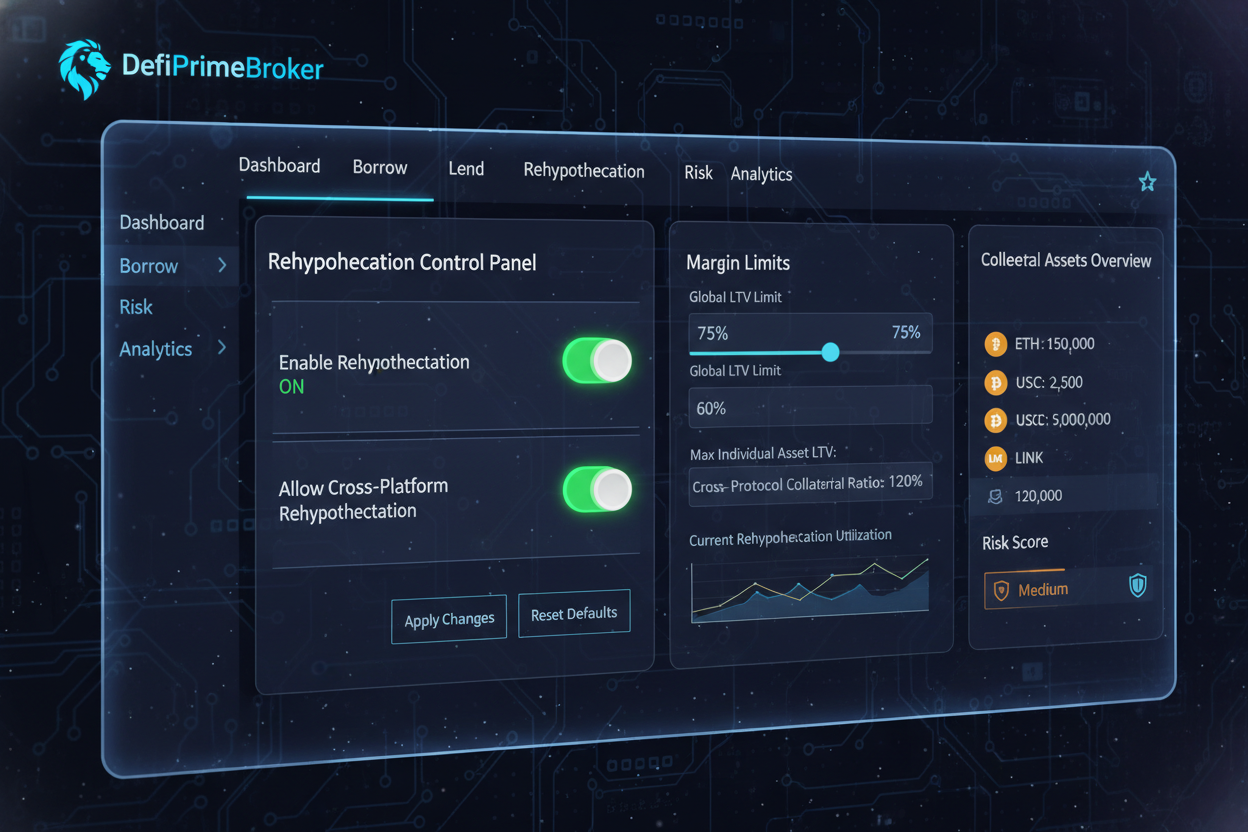
Consider the mechanics: rehypothecation, where brokers reuse client collateral for their own financing, has fueled TradFi profits but also amplified systemic vulnerabilities, as seen in past crises. In DeFi, this practice is programmable. Traders can enforce strict limits via smart contracts, ensuring collateral remains ring-fenced or selectively deployed. This shift empowers sophisticated users to engage in DeFi margin trading without the opacity of proprietary firm evaluations or the fragmentation of multi-exchange trading.
Bridging TradFi Gaps with Onchain Transparency
Historical prime brokerage thrived on financing spreads from margin loans and collateralized lines, yet digital assets trading remains siloed across venues. CeFi solutions like FalconX's recent Hyperliquid integration offer up to 5x leverage, extending institutional tools to onchain derivatives. Ripple Prime follows suit, unifying margin across assets from crypto to FX. These moves signal DeFi's maturation, with risk systems now robust enough for cross-venue margin unification, as noted by experts like MacBrennan Peet.
Yet, true innovation lies in decentralization. Unlike prop firms reshaping FX/CFD brokerage through regulatory arbitrage, onchain platforms embed DeFi risk management tools at the protocol level. Network-linked collateral, for instance, tokenizes assets for real-time margining, curtailing operational friction. DefiPrimeBroker. com exemplifies this by providing customizable margin limits and real-time reporting, all verifiable on-chain. This conservative approach aligns with building wealth patiently, sidestepping the high-velocity pitfalls of 24/7 crypto prop strategies.
Rehypothecation Controls: Precision Beyond Prop Firm Black Boxes
Prop firms allure with funded accounts and profit splits, but their black-box risk models obscure true exposure. In contrast, crypto prime brokerage margin onchain demands explicit controls. Rehypothecation in DeFi isn't a blanket permission; it's a toggle. Disable it entirely for ultra-conservative positions, or permit granular reuse tied to liquidity pools, all audited transparently. Arkis. xyz highlights this distinction: decentralized prime brokerage secures without intermediaries, fostering trust through code over contracts.
Project 0's innovations further illustrate how DeFi tackles portfolio challenges, integrating credit markets that quietly supplant traditional financing. For margin traders, this means deploying strategies with onchain prime brokerage precision: low-risk longs funded efficiently, rehypothecation capped to avoid cascade failures. At DefiPrimeBroker. com, we prioritize these toggles, ensuring institutions maintain compliance amid volatility. The result? Capital efficiency without complacency, a strategic edge in fragmented markets.
Strategic Advantages for Institutional DeFi Traders
Institutional adoption accelerates as onchain solutions unify fragmented trading. CV5 Capital notes the absence of established clearing in digital assets, but platforms now bridge this with comprehensive reporting. Traders access Hyperliquid's derivatives liquidity via prime frameworks, managing multi-asset margin seamlessly. This isn't mere leverage; it's controlled amplification, where rehypothecation settings dictate borrowing costs and risk parity.
Strategically, I advocate patience: layer fundamental analysis atop these tools for enduring positions. DefiPrimeBroker. com's real-time dashboards reveal every toggle's impact, from collateral utilization to performance metrics. Beyond prop firms' short-term challenges, this fosters sustainable alpha in DeFi's 24/7 arena.
These dashboards aren't just reactive; they project scenarios, modeling how rehypothecation adjustments influence liquidation thresholds under stress. For the veteran investor, this visibility transforms DeFi margin trading from speculative frenzy into disciplined allocation.
Configuring Rehypothecation: A Conservative Playbook
Mastery begins with deliberate setup. On platforms like DefiPrimeBroker. com, toggling rehypothecation isn't an afterthought but a foundational decision. Opt for zero rehypothecation on core holdings to preserve capital sanctity, or calibrate partial reuse for yield-bearing pools, always capped below 50% to buffer volatility spikes. This granular control sidesteps the indiscriminate collateral grabs of traditional brokers, where rehypothecation ratios often exceed 140: 1 pre-crisis.
Secure DeFi Margins: Mastering Rehypothecation Toggles on DefiPrimeBroker
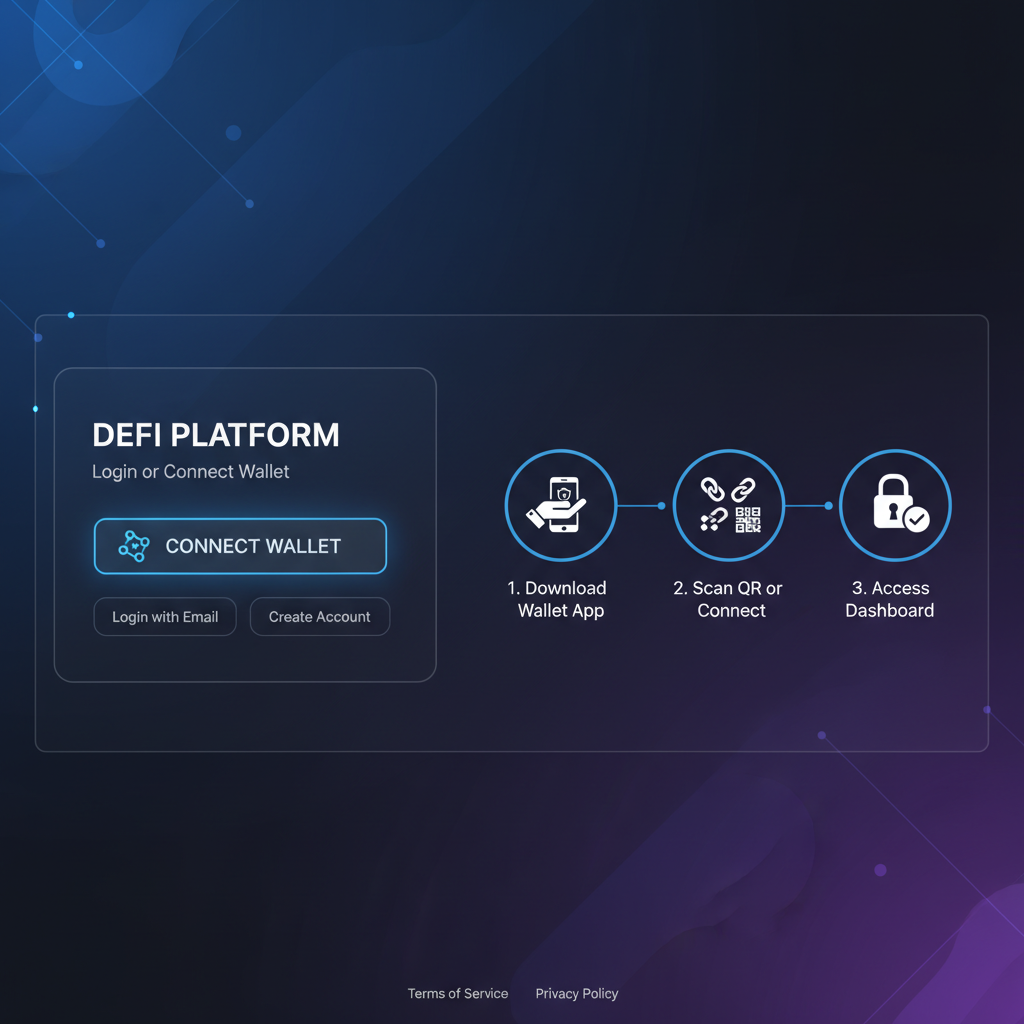

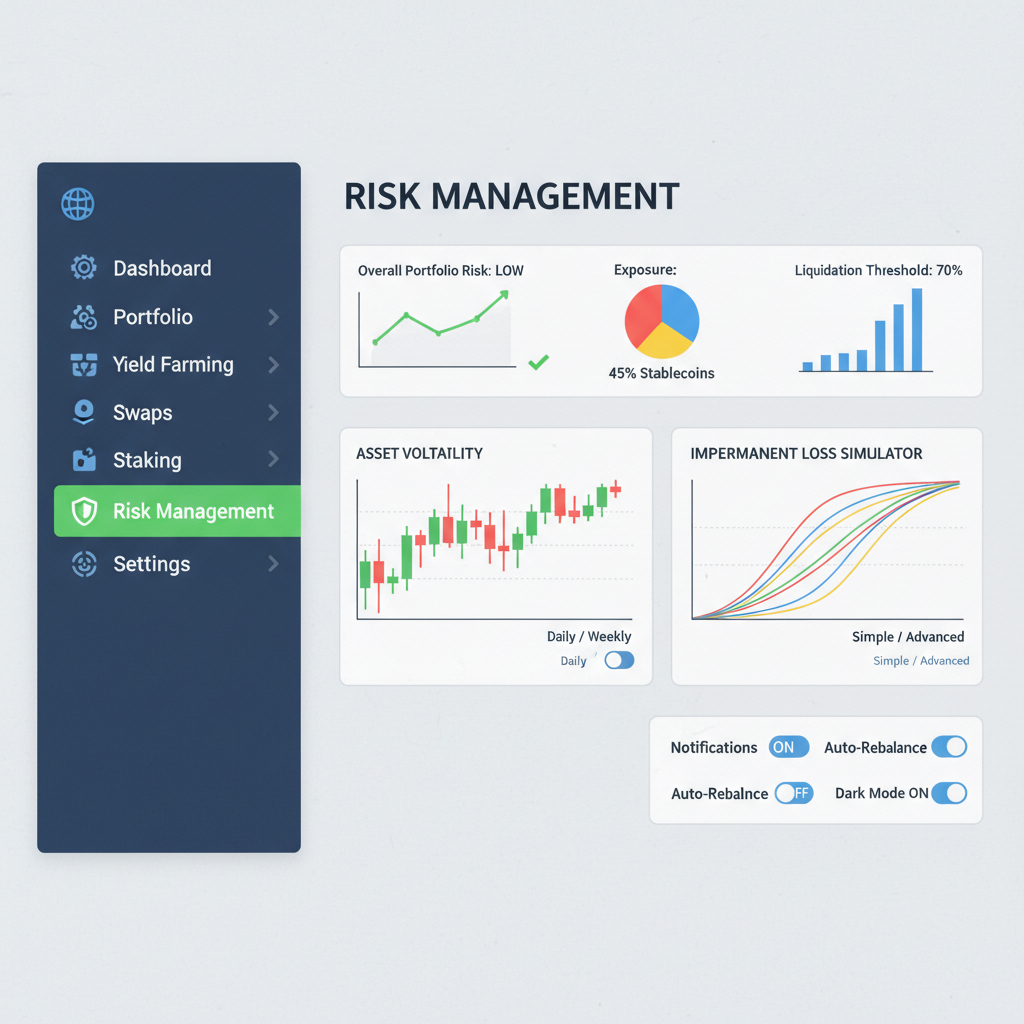
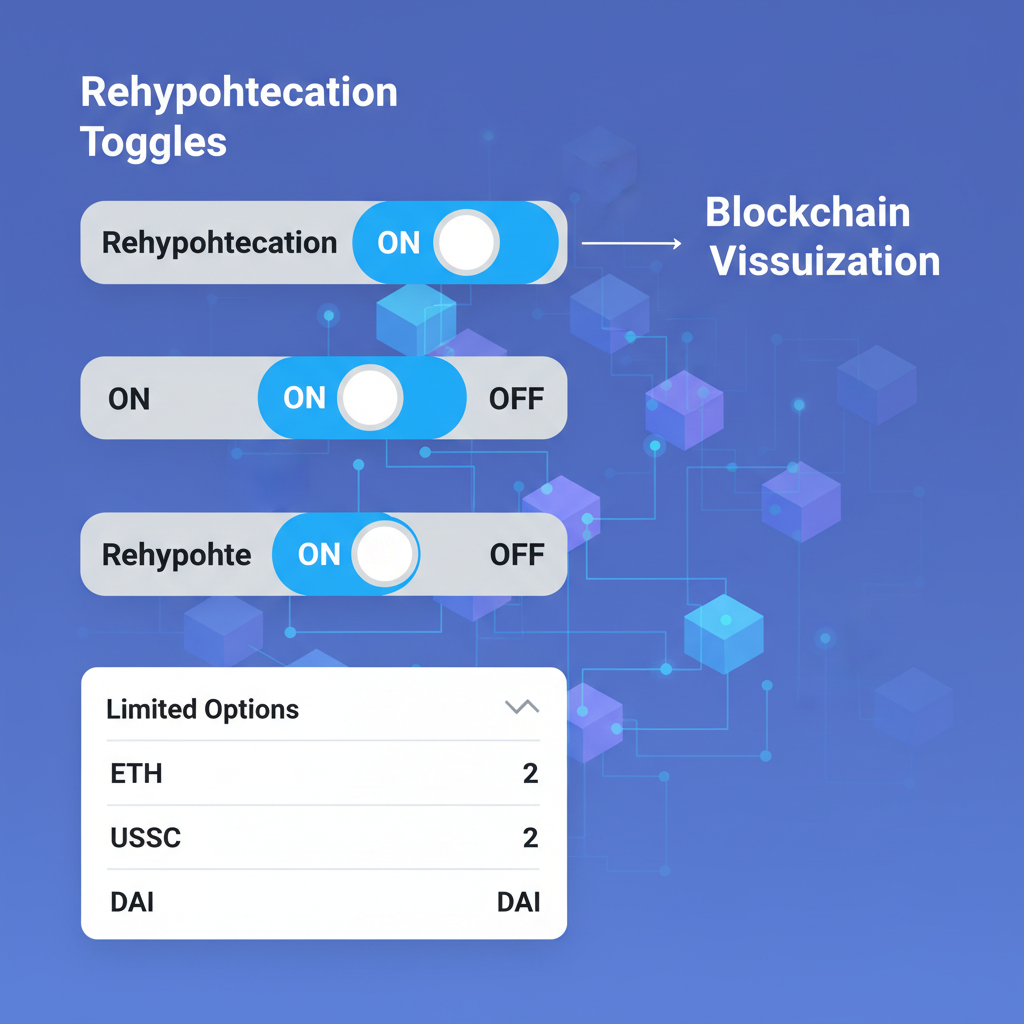

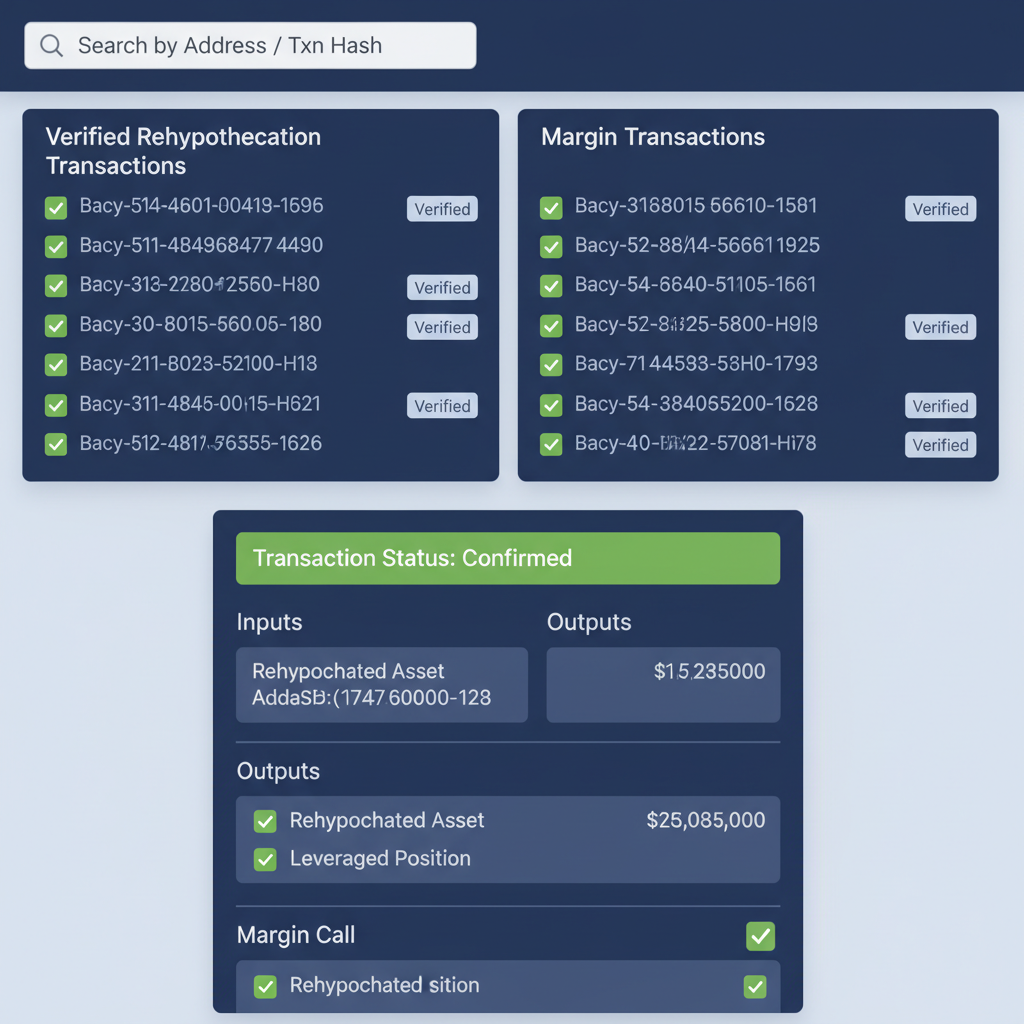
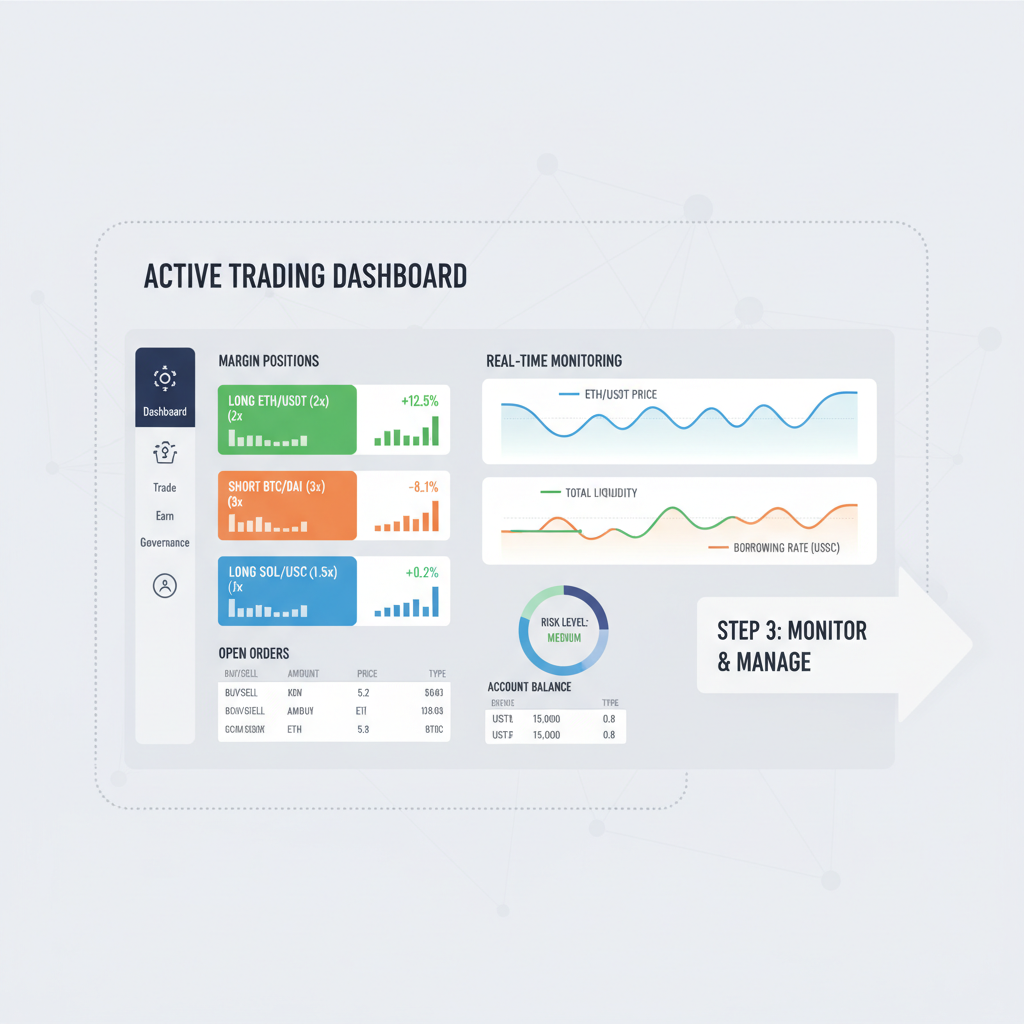
Once configured, these settings integrate seamlessly with cross-chain margin calls, alerting traders to imbalances before they cascade. Institutions benefit most here, layering DeFi risk management tools over multi-venue positions without siloed exposures. It's a far cry from prop firms' rigid drawdown rules, which punish outliers rather than adapt.
Beyond Fragmentation: Unified Margin in a Multi-Venue World
Digital asset markets fragment across exchanges, lacking TradFi's clearing backbone. Yet onchain prime brokerage unifies this chaos. FalconX's Hyperliquid financing delivers 5x leverage with institutional guardrails, while Ripple Prime's expansion embeds onchain liquidity into broader portfolios spanning FX and swaps. Network-linked collateral elevates this further, tokenizing real-world assets for programmable margining that audits itself.
Traditional vs Onchain Prime Brokerage
| Feature | Traditional Prime Brokerage | Onchain Prime Brokerage |
|---|---|---|
| Rehypothecation | Opaque with regulatory limits (prime brokers reuse client collateral for own borrowing) | User-configurable toggles, verifiable on-chain (e.g., DefiPrimeBroker.com) |
| Transparency | Off-chain opacity and counterparty risk | Fully verifiable on blockchain, reducing risks |
| Risk Controls | Centralized limits and manual oversight | Customizable, programmable on-chain limits (e.g., network-linked collateral) |
| Margin Unification | Fragmented across exchanges (CV5 Capital) | Unified across venues and assets (Ripple Prime, FalconX on Hyperliquid) |
| Cost Efficiency | High friction from intermediaries | Low-friction, capital-efficient DeFi mechanisms |
DefiPrimeBroker. com stands out by prioritizing these elements, offering toggles that align with conservative mandates. Traders avoid the prop trading grind, endless challenges for funded desks, and instead build positions grounded in fundamentals, like undervalued DeFi primitives amid liquidity shifts.
Rehypothecation Risks and Controls: Traditional Prop Firms vs. Onchain DeFi Prime Brokerage
| Aspect | Traditional Prop Firms | Onchain DeFi Prime Brokerage |
|---|---|---|
| Transparency | Opaque off-chain practices; rehypothecation hidden from clients (Source: Databento) | Fully verifiable on-chain; every margin position and rehypothecation toggle transparent (DefiPrimeBroker.com, Arkis.xyz) |
| Rehypothecation Risks | High counterparty risk from broker misuse of collateral; potential for insolvency losses | Minimal risk with protocol-level controls and network-linked collateral; programmable toggles reduce operational risks (Kenson Investments) |
| Controls & Auditability | Limited client oversight; reliant on firm policies | Smart contract enforced; real-time auditability and embedded controls at protocol layer |
| Unified Margin | Fragmented across exchanges; no seamless cross-venue management (CV5 Capital) | Unified across venues with advanced risk systems; e.g., Ripple Prime & FalconX integrate Hyperliquid for multi-asset margin (Ripple, FalconX) |
| Leverage Examples | Firm-discretionary limits in FX/CFD/crypto prop trading | Up to 5x on Hyperliquid via prime brokerage; customizable for institutions (FalconX) |
| Expert View | Reshaping via regulatory shifts but lacks DeFi transparency (DXtrade, HyroTrader) | DeFi now has staying power for unified margin (MacBrennan Peet, Talking Tokens) |
Experts like those at Arkis emphasize decentralization's edge: no intermediary defaults, just code-enforced parity. Project 0's DeFi credit innovations complement this, supplanting old financing models with pools that reward patience over velocity.
Looking ahead, this convergence reshapes crypto prime brokerage margin. As DeFi matures, expect tighter protocol-level controls, perhaps AI-augmented risk oracles fine-tuning rehypothecation in real time. For margin traders, the imperative remains strategic restraint: leverage sparingly, verify relentlessly, and let onchain transparency compound returns over cycles. Platforms engineering these capabilities don't just facilitate trades; they fortify legacies in decentralized finance.




No comments yet. Be the first to share your thoughts!