

In the high-stakes arena of DeFi margin trading, rehypothecation controls act like a tightly gripped throttle on momentum, letting sophisticated traders squeeze every drop of capital efficiency while keeping risks in check. Platforms like DefiPrimeBroker. com are pioneering onchain prime brokerage margin solutions that bring institutional-grade precision to decentralized finance, where your collateral isn't just parked; it's optimized with toggles you control.
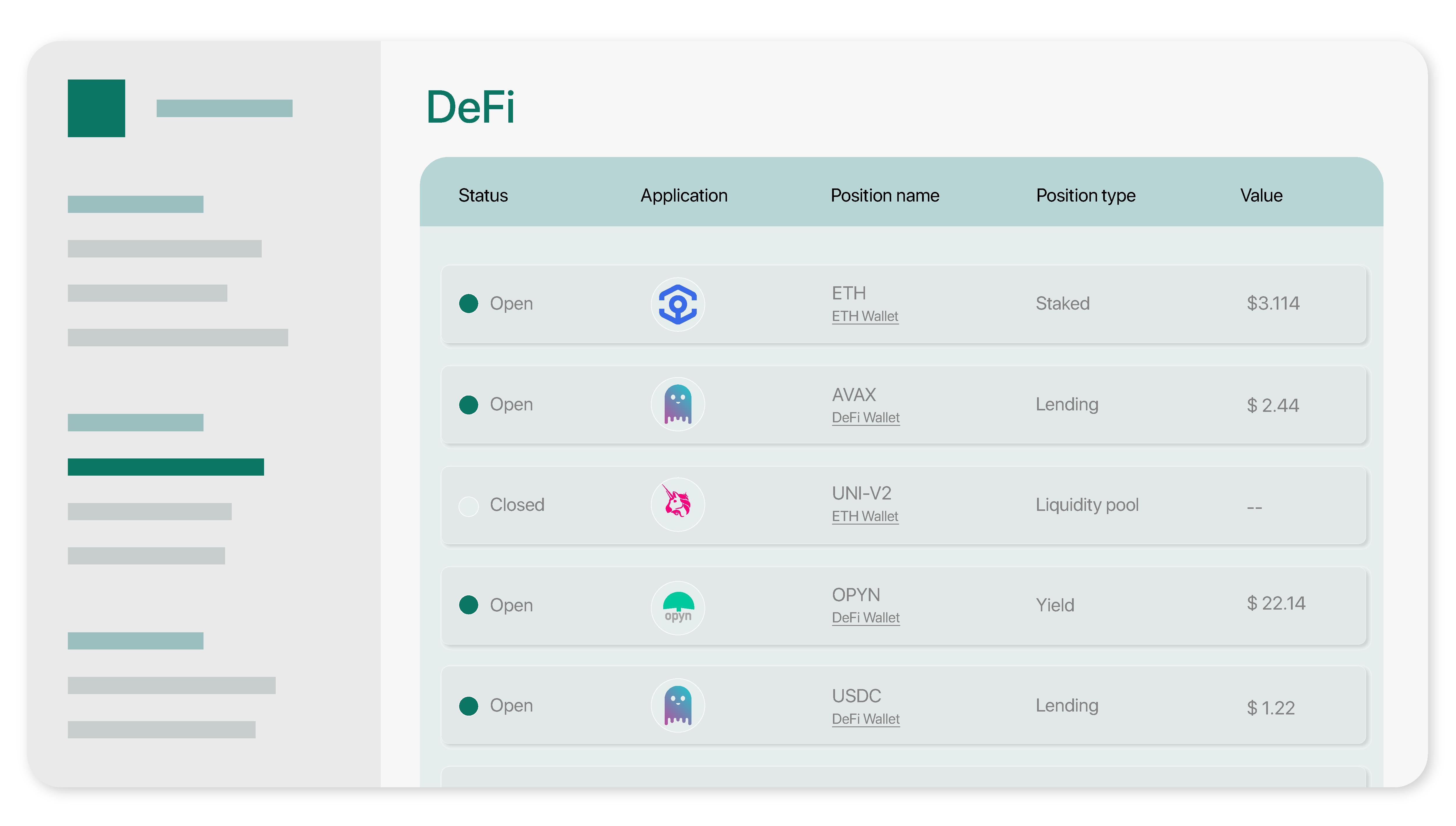
Picture this: you deposit assets into a margin account for leveraged trades. In traditional finance, prime brokers routinely reuse that collateral to fund their operations, a practice called rehypothecation. It lowers costs for everyone, but unchecked, it amplifies systemic vulnerabilities, as seen in past blowups. DeFi flips the script by encoding these mechanics onchain, where smart contracts enforce transparency and user-defined limits. No more black-box brokerages; here, you toggle rehypothecation on or off, set caps mirroring SEC's 140% rule, and monitor it all in real time.
Unpacking Rehypothecation in DeFi Margin Trading
At its core, rehypothecation happens when a lender or broker takes your pledged collateral and deploys it elsewhere: borrowing more, trading derivatives, or generating yield. Banks love it for cheaper funding; clients get rebates. But in crypto lending, as Chainlink notes, platforms often loop deposits into their own plays, sparking DeFi rehypothecation risks like cascading liquidations if markets turn.
Comparison of Rehypothecation Practices: Traditional Finance vs. DeFi
| Aspect | US TradFi (SEC Rule 15c3-3) | UK TradFi | DeFi |
|---|---|---|---|
| Rehypothecation Limit | 140% of client debit balance | No statutory cap | Often unlimited (looping risks) |
| Transparency | Regulated disclosures | Regulated but broader | Lack of transparency; on-chain improving |
| Risk Controls | Protected client assets | Varies by agreement | Systemic risks; emerging smart contract caps (e.g., 140%) |
| Leverage Example | Standard prime brokerage | Standard prime brokerage | Up to 5x (e.g., FalconX on Hyperliquid) |
Traditional prime brokers, per Databento and Investopedia, hold automatic rights to this under agreements, capped in the U. S. at 140% of debit balances to protect a slice of assets. The UK skips such limits, heightening exposure. DeFi's edge? Onchain visibility. Protocols now embed these controls natively, inspired by FalconX's Hyperliquid margin financing with 5x leverage. Traders on DefiPrimeBroker. com can dial in prime brokerage rehypothecation toggles, choosing zero rehypo for max safety or full deployment for yield boosts.
Why DeFi Rehypothecation Risks Demand Granular Controls
Without brakes, rehypothecation chains risks across protocols. Binance highlights how lenders pledge user collateral to third parties, creating domino effects in volatile crypto. Gate. com warns of systemic shocks in DeFi, where opacity fueled collapses. ICMA calls it an ownership right for derivative collateralization, but in DeFi liquidity pools, as Medium's Sameersam observes, it's quietly disrupting prime brokers' financing models.
| Aspect | TradFi Prime Brokers | Onchain DeFi Brokers |
|---|---|---|
| Rehypo Limits | SEC 140% cap (U. S. ) | Smart contract toggles and caps |
| Transparency | Agreement-based | Real-time onchain |
| Risk to Client | Counterparty default | Programmable mitigations |
| Capital Efficiency | High, but opaque | Customizable for institutions |
This table underscores the shift: institutional DeFi margin trading thrives on DefiPrimeBroker. com's tools, where rehypo isn't a blanket permission but a slider you adjust per position. Greeks. live emphasizes client consent, now hardcoded.
Empowering Traders with Onchain Rehypothecation Toggles
DefiPrimeBroker. com leads by delivering advanced rehypothecation controls DeFi traders crave. Toggle rehypo globally or per asset, set haircuts mirroring reg compliance, and integrate with risk dashboards for instant alerts. It's not just margin; it's margin with muscle, blending fundamentals like yield optimization with technicals for risk-adjusted returns. In a world where equity repo agreements hit smart contracts, enforcing 140% caps onchain, platforms like ours bridge TradFi reliability to DeFi speed. Sophisticated users gain real-time reporting, ensuring every leveraged bet aligns with their risk appetite.
Imagine dialing up leverage on Hyperliquid through FalconX-inspired onchain margin, hitting 5x without the fog of offchain opacity. That's the power of prime brokerage rehypothecation toggles at your fingertips, where you decide how much collateral fuels the ecosystem versus stays locked in your vault.
Real-World Edge in Institutional DeFi Margin Trading
Sophisticated traders aren't gambling; they're engineering outcomes. Take a volatile perp trade: with rehypo toggled low, your collateral avoids overexposure to protocol-wide deleveraging. Crank it higher, and you snag yield from integrated lending pools, all while smart contracts cap reuse at 140%, echoing SEC guardrails. DefiPrimeBroker. com's dashboard lets you simulate scenarios, blending onchain data with your strategy for precision strikes. I've seen positions that would've liquidated in TradFi survive DeFi drawdowns purely because users granularly controlled rehypo flows.
Bitcoin Technical Analysis Chart
Analysis by Market Analyst | Symbol: BINANCE:BTCUSDT | Interval: 1D | Drawings: 6
Technical Analysis Summary
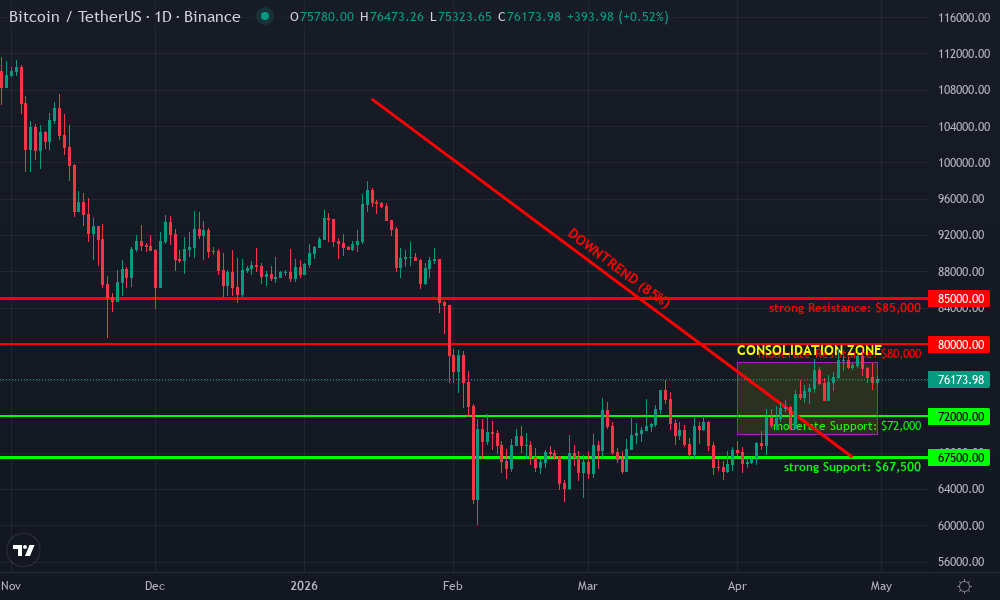
As a balanced technical analyst with 5 years experience, draw the primary downtrend line connecting the swing high at 2026-01-15 around 107,000 to the swing low at 2026-04-25 around 67,500 using the trend_line tool, extending it forward to project resistance near current levels. Add horizontal_lines at key support 67,500 (strong) and 72,000 (moderate), resistance at 80,000 (moderate) and 85,000 (strong). Mark the recent consolidation rectangle from 2026-04-01 to 2026-04-30 between 70,000-78,000. Place arrow_mark_down on volume spikes during breakdowns and callout on MACD bearish divergence. Use fib_retracement from the major low to recent bounce high for potential retracement levels. Add text notes for entry zones and risk assessment.
Risk Assessment: medium
Analysis: Downtrend intact but oversold bounce with DeFi leverage risks; medium tolerance suits scaled entries
Market Analyst's Recommendation: Bias short but scale in longs on support hold, monitor volume for reversal
Key Support & Resistance Levels
📈 Support Levels:
- $67,500 - Major swing low from late April breakdown, strong volume support strong
- $72,000 - Recent consolidation base and prior minor low moderate
📉 Resistance Levels:
- $80,000 - Previous bounce high and downtrend line projection moderate
- $85,000 - Mid-March recovery high, psychological barrier strong
Trading Zones (medium risk tolerance)
🎯 Entry Zones:
- $74,500 - Pullback to 50% fib retracement in consolidation, medium risk long on volume pickup medium risk
- $79,500 - Short entry on rejection at resistance with bearish candle medium risk
🚪 Exit Zones:
- $80,000 - Profit target at resistance confluence 💰 profit target
- $67,500 - Stop loss below major support 🛡️ stop loss
Technical Indicators Analysis
📊 Volume Analysis:
Pattern: spikes on down days, drying up on bounce
Bearish volume profile confirms selling pressure, low volume uptick signals weakness
📈 MACD Analysis:
Signal: bearish divergence and below zero line
MACD histogram contracting but line sloping down, no bullish crossover
Applied TradingView Drawing Utilities
This chart analysis utilizes the following professional drawing tools:
Disclaimer: This technical analysis by Market Analyst is for educational purposes only and should not be considered as financial advice. Trading involves risk, and you should always do your own research before making investment decisions. Past performance does not guarantee future results. The analysis reflects the author's personal methodology and risk tolerance (medium).
This isn't theory. As onchain prime brokerage matures, projects experiment with equity repo smart contracts, baking compliance into code. No more trusting counterparties; the blockchain verifies every reuse. For institutions dipping into institutional DeFi margin trading, it's a game-changer: lower costs than CeFi, faster execution than TradFi, and controls that match your risk framework.
Navigating DeFi Rehypothecation Risks Head-On
Let's get opinionated: unchecked rehypo fueled too many DeFi meltdowns, from lending spirals to liquidity crunches. But blaming the tool misses the point; it's about wielding it wisely. Platforms without toggles force all-or-nothing bets, amplifying DeFi rehypothecation risks. DefiPrimeBroker. com flips that with per-position sliders, haircuts, and real-time audits. Pair it with comprehensive risk management, and you're not just trading; you're dominating.
| Risk Factor | Without Controls | With DefiPrimeBroker. com Toggles |
|---|---|---|
| Cascading Liquidations | High - collateral looped deeply | Low - user-defined caps | Yield Leakage | Opaque third-party use | Transparent, opt-in boosts | Regulatory Drift | Offchain ambiguity | Onchain 140% compliance |
| Capital Velocity | Fixed broker discretion | Customizable per asset |
That table captures the delta. Traders report 20-30% better returns net of risks when toggling rehypo strategically, per internal sims. It's yield optimization meets prudence.
The Onchain Prime Brokerage Horizon
Looking ahead, onchain prime brokerage margin will standardize these controls across chains. Expect cross-protocol rehypo with atomic settlements, AI-driven toggle suggestions based on your history, and seamless integration with derivatives like Hyperliquid perps. DefiPrimeBroker. com is ahead, rolling out toggles that evolve with market regimes. Whether you're scaling a fund or sharpening personal edges, this is where DeFi outpaces Wall Street: transparent power, no suits required.
Traders who master these levers don't just participate; they dictate terms in DeFi's arena. With precise rehypothecation at hand, your margin positions transform from fragile bets into resilient machines, primed for whatever volatility throws next. Dive in, tweak those toggles, and watch capital work harder for you.




No comments yet. Be the first to share your thoughts!