
The 2026 institutional mandate
The landscape of decentralized finance is undergoing a structural shift. In 2026, the dominant narrative is no longer speculative retail trading but rather regulated, prime-brokerage-driven institutional adoption. This transition marks a move from high-risk, unstructured access to deep liquidity, financing, and advanced technology solutions tailored for the world's top institutions.
Prime brokers like FalconX and August are central to this change. They provide the infrastructure necessary for traditional finance players to enter the digital asset space with the same risk management tools they use in traditional markets. For example, August recently raised $10 million to expand its prime brokerage services, aiming to simplify DeFi access for investors while maintaining strict compliance standards. This funding signals growing confidence in the sector's ability to scale beyond niche crypto-native users.
The market sentiment reflects this cautious optimism. Prediction markets currently assign a 17% chance to Bitcoin reclaiming the $100,000 level in 2026, while a 35% chance exists for it falling below $40,000. These probabilities highlight the volatility that institutions must navigate. However, the presence of robust prime brokerage services reduces the operational friction that previously deterred large-scale capital entry.
This institutional mandate is not just about volume; it is about legitimacy. By integrating with established prime brokers, DeFi protocols gain access to regulated capital flows. This shift ensures that the growth of decentralized finance is sustainable, driven by entities that prioritize long-term stability over short-term speculation.
AI-driven liquidity aggregation
Traditional prime brokerage struggles with fragmented liquidity. Traders often face poor execution because capital is split across dozens of decentralized exchanges (DEXs) and centralized exchanges (CEXs). AI-driven liquidity aggregation solves this by acting as a single intelligent layer that routes orders to the best available prices across all venues simultaneously.
Instead of manually splitting an order to minimize slippage, AI algorithms analyze real-time depth and latency across the entire crypto ecosystem. This unified view allows prime brokers to execute large institutional trades with minimal market impact. The system dynamically balances execution between on-chain pools and off-chain order books, ensuring that capital efficiency remains high even during volatile market conditions.
This convergence of CeFi and DeFi infrastructure is reshaping prime brokerage. By treating liquidity as a unified resource rather than isolated silos, AI enables faster settlement and better risk management. Institutional clients benefit from institutional-grade execution speeds without sacrificing the transparency and composability inherent to decentralized finance.

The shift toward AI aggregation is not just about speed; it is about structural resilience. As DeFi-native prime brokers emerge, they are rebuilding the margin and clearing infrastructure to support this unified liquidity model. This evolution allows for more sophisticated hedging strategies and capital utilization that were previously impossible in fragmented markets.
Smart Order Routing Mechanics
Smart order routing (SOR) in 2026 has transitioned from a best-effort liquidity aggregation tool to a deterministic execution engine. For institutional prime brokerage, the margin for error is nonexistent. The primary objective is no longer just finding the cheapest price; it is about guaranteeing execution certainty while minimizing slippage across fragmented liquidity pools.
Latency and Gas Optimization
In high-frequency DeFi environments, latency is measured in milliseconds and gas units. SOR algorithms now employ predictive modeling to estimate gas costs across multiple chains before initiating a trade. This pre-calculation prevents failed transactions that would otherwise incur sunk gas fees.
The routing engine prioritizes paths that balance speed with cost efficiency. For example, a large swap might be split between a centralized exchange and a decentralized liquidity pool to avoid slippage on the latter. The algorithm dynamically adjusts the split ratio based on real-time network congestion and liquidity depth.
Cross-Chain Execution
Cross-chain execution requires bridging assets without exposing the trade to bridge-specific risks. Modern SOR solutions utilize atomic swaps and wrapped tokens to ensure that if one leg of the trade fails, the entire transaction reverts. This atomicity is critical for maintaining the integrity of large institutional orders.
The routing logic evaluates the cost of bridging against the potential price improvement on the target chain. If the bridge fee exceeds the expected gain, the order is routed to a localized liquidity source. This approach ensures that cross-chain trades are executed only when they offer a net positive outcome for the client.
Margin and Rehypothecation Controls
Institutional adoption of DeFi prime brokerage hinges on risk management frameworks that mirror traditional finance while leveraging on-chain transparency. The core differentiator between CeFi and DeFi lies in how margin is calculated and how collateral is rehypothecated. CeFi platforms often operate as black boxes, where assets are commingled and usage terms are defined by opaque legal agreements. In contrast, DeFi prime services utilize smart contracts to enforce margin requirements in real-time, providing immutable proof of reserves and collateral ratios.
Margin systems in DeFi have evolved beyond simple loan-to-value ratios to include dynamic liquidation engines and cross-margin capabilities. These systems allow institutions to net out positions across multiple protocols, reducing the total capital required to maintain leverage. This efficiency is critical for high-frequency trading firms and market makers who need to optimize capital deployment. Meanwhile, CeFi margin models remain largely static, relying on periodic audits that may lag behind market volatility.
Rehypothecation—the practice of reusing collateral to finance other trades—presents a significant risk in traditional finance, where counterparty insolvency can lead to asset loss. DeFi addresses this through programmable controls. Smart contracts can restrict rehypothecation entirely, ensuring that collateral remains ring-fenced for specific trades, or allow it only under strict, transparent conditions. This granular control over asset usage builds the trust necessary for large-scale institutional capital to enter the ecosystem.
| Feature | CeFi Prime | DeFi Prime |
|---|---|---|
| Margin Calculation | Static, periodic audits | Real-time, on-chain |
| Collateral Usage | Opaque rehypothecation | Programmable, transparent |
| Liquidation | Manual intervention | Automated smart contracts |
| Transparency | Limited reporting | Full on-chain visibility |
Key infrastructure providers
Prime brokerage infrastructure is shifting from opaque, centralized ledgers to transparent, on-chain rails. This transition allows institutional clients to access deep liquidity while maintaining strict custody and risk management protocols. The leading players in this space are bridging the gap between traditional finance requirements and decentralized execution.
August has emerged as a significant player by focusing on secure on-chain prime brokerage infrastructure. With over $550 million in total value locked (TVL) and $45 billion in trading volume, August serves more than 150 institutional clients. Their model emphasizes seamless access to decentralized finance (DeFi) markets without sacrificing the security standards expected by large asset managers [src-5].
FalconX continues to dominate the digital asset prime brokerage landscape by providing deep liquidity and advanced technology solutions. Recognized as the largest institutional crypto prime broker, FalconX supports the world's top institutions with robust financing and trading tools. Their infrastructure is designed to handle the complex operational demands of high-frequency institutional trading [src-3].
Newer entrants like August Digital are also raising capital to expand their reach, with recent funding rounds led by prominent investors. These firms are building the necessary rails to make DeFi accessible to a broader range of institutional players, moving beyond niche crypto-native users [src-2].
DeFi price outlook 2026
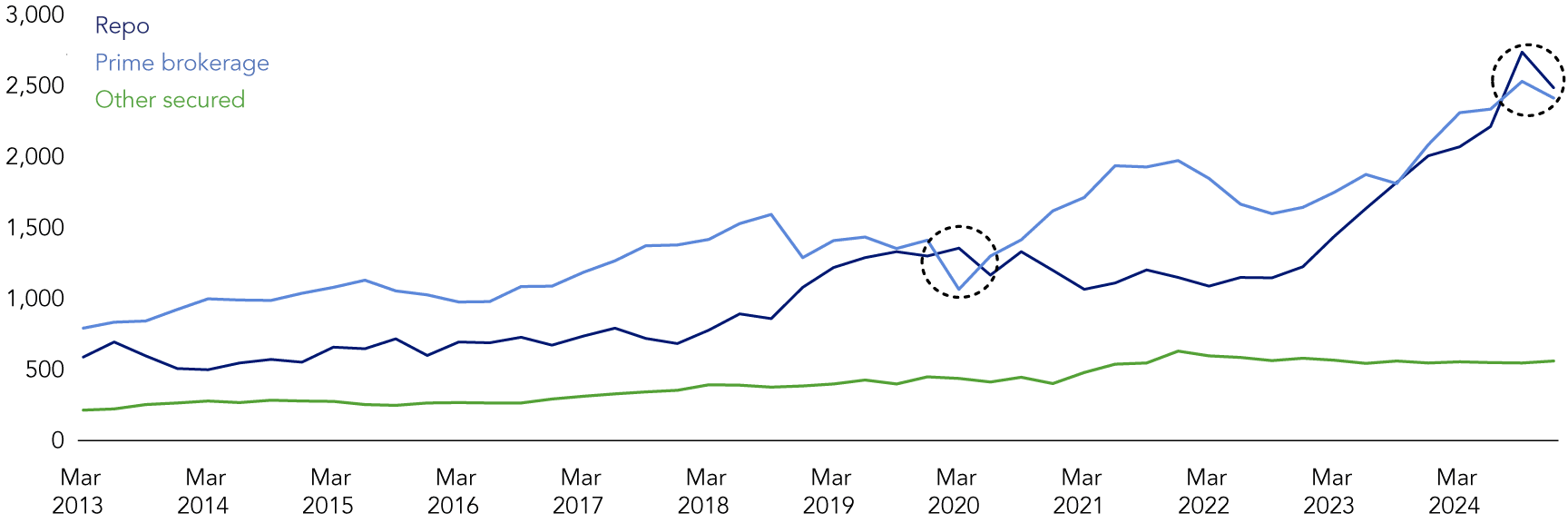
Market expectations for decentralized finance assets in 2026 reflect a cautious institutional stance. While some retail-focused platforms project minor positive movements, broader market sentiment remains anchored by the performance of underlying crypto infrastructure. Prime brokerage firms are increasingly focusing on risk management tools rather than speculative price appreciation, signaling a maturation of the DeFi sector.
The divergence between specific DeFi token predictions and major cryptocurrency benchmarks highlights the sector's fragmentation. Institutional capital is flowing into prime brokerage infrastructure, as evidenced by recent funding rounds for firms like August, which aim to streamline DeFi access for professional investors. This shift suggests that price stability will likely come from improved liquidity and regulatory clarity rather than viral market rallies.
No comments yet. Be the first to share your thoughts!