
The shift from CeFi to on-chain prime services
The institutional adoption of DeFi prime brokerage is no longer a speculative experiment. By 2026, the industry has moved past the pilot phase into a period of regulated, scalable infrastructure. This transition marks a fundamental shift from the opaque, siloed nature of traditional Centralized Finance (CeFi) to a more transparent, on-chain model that institutions can audit and integrate into existing compliance frameworks.
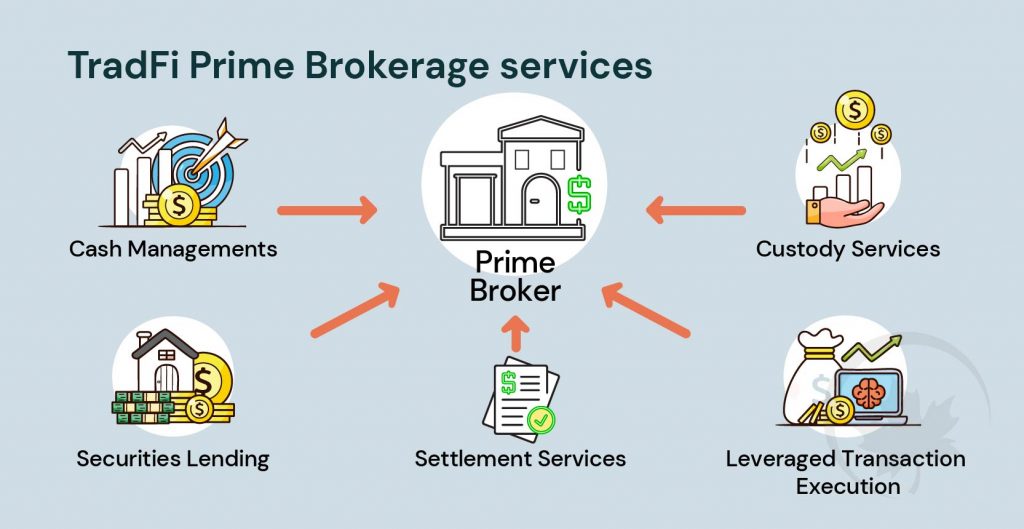
For years, prime brokerage was the domain of large banks that managed clearing, lending, and custody behind closed doors. The new on-chain prime services replicate these functions—lending, leverage, and settlement—but execute them through smart contracts and regulated intermediaries. This allows institutional clients to access deep liquidity pools without sacrificing the regulatory oversight they require. The result is a hybrid ecosystem where DeFi’s efficiency meets CeFi’s accountability.
The tipping point for this shift is liquidity depth and regulatory clarity. Early DeFi protocols suffered from fragmented liquidity and high slippage, making them unsuitable for large-scale institutional trading. Today, aggregated liquidity protocols and specialized prime brokers provide the necessary depth to handle significant order sizes. Simultaneously, regulatory bodies in key jurisdictions have begun to outline clearer paths for on-chain asset custody and reporting, reducing the legal uncertainty that previously stalled institutional entry.
This convergence is reshaping the market structure. Institutions are no longer just observing DeFi; they are actively building infrastructure to participate. The move toward on-chain prime services represents a structural upgrade, offering lower counterparty risk and greater operational efficiency than traditional CeFi models. As these systems mature, they are becoming the new standard for institutional crypto trading.
Margin financing and leverage on derivatives
Institutional prime brokers are now bridging the gap between traditional margin practices and on-chain liquidity. FalconX recently launched a Prime Brokerage Financing solution for Hyperliquid, allowing up to 5x leverage on the leading DeFi derivatives platform. This move signals a shift toward institutional-grade risk management in decentralized markets.
The ability to access leveraged positions without holding the full notional value of the trade is a core requirement for professional trading desks. By integrating margin financing directly into the prime brokerage layer, these providers reduce counterparty risk and simplify collateral management. Traders can now maintain larger, more diversified portfolios while adhering to strict internal risk limits.
This integration also brings greater transparency to funding rates and liquidation mechanics. Traditional finance firms are accustomed to centralized clearinghouses; DeFi prime brokers are replicating that reliability through on-chain verification. The result is a more robust infrastructure that supports high-frequency and large-block trading strategies previously limited to centralized exchanges.
AI-driven liquidity pools and cross-chain access
Institutional orders require more than just deep pockets; they need intelligent routing to avoid market impact. AI-driven liquidity pools now act as the central nervous system for these large trades, dynamically allocating capital across multiple chains and protocols in real-time. This technology minimizes slippage by splitting orders into smaller fragments and executing them where liquidity is deepest, rather than forcing a single large trade on a congested mainnet.
The mechanism works by continuously scanning order books across decentralized exchanges like Uniswap and lending protocols like Aave. When an institutional client submits a large buy or sell order, the AI model predicts short-term price movements and liquidity shifts. It then routes the trade through the most efficient path, often leveraging cross-chain bridges to access liquidity that isn't available on the primary chain. This reduces the "friction cost" that typically erodes returns on block-sized trades.

The system aggregates data from hundreds of pools across Ethereum, Solana, and Layer 2 networks. It identifies the lowest effective price by accounting for gas fees and bridge costs, ensuring the final execution price is optimal for the client.
Instead of submitting one massive transaction, the AI breaks the order into micro-transactions. These are executed simultaneously or sequentially based on volatility, preventing the market from reacting to a single large signal.
Once trades are executed on various chains, the AI reconciles the positions. It handles the complex logistics of moving assets back to the client's preferred custody solution, ensuring that the final net position matches the original intent without intermediate exposure.
This approach is becoming the standard for prime brokerage services in DeFi. Firms like August and platforms integrating with Aave Labs' Horizon are already deploying these models to manage billions in deposits. By automating the search for liquidity, institutions can trade with the speed and precision previously reserved for traditional centralized finance, but with the transparency and self-custody benefits of DeFi.

Regulatory compliance and tokenized assets
Institutional prime brokerage in 2026 is no longer defined by leverage alone, but by the structural integrity of its compliance framework. The primary keyword phrase DeFi prime brokerage has evolved into a regulated utility, where access to deep liquidity is contingent upon adherence to strict jurisdictional standards. Two pillars now define this new standard: MiCA authorization in Europe and SEC-compliant tokenization in the United States.
The MiCA Authorization Standard
For European-based institutional clients, the Markets in Crypto-Assets (MiCA) regulation provides the necessary legal clarity to deploy significant capital. MiCA authorization ensures that the underlying DeFi protocols and custodial layers meet rigorous capital adequacy and operational resilience requirements. This regulatory stamp transforms DeFi from a speculative frontier into a compliant counterparty for traditional finance. Institutions can now integrate DeFi yield strategies into their balance sheets without the existential risk of regulatory arbitrage or sudden enforcement actions.
SEC-Compliant Tokenization
In the US market, the bridge between traditional finance and DeFi is being built through tokenized real-world assets (RWAs). The listing of Securitize on the NYSE under the ticker SECZ marks a pivotal shift. Securitize’s presence on a major exchange signals that tokenized securities are no longer niche experiments but core components of institutional infrastructure. This integration allows prime brokers to offer services that blend the efficiency of blockchain settlement with the legal protections of SEC-regulated entities.
The convergence of these two regulatory frameworks creates a "walled garden" approach to DeFi. Prime brokers act as the gatekeepers, ensuring that only compliant, tokenized assets are accessible to institutional clients. This reduces counterparty risk and enhances transparency, making DeFi prime brokerage a viable alternative to traditional prime services for hedge funds and family offices.
Market Context
The shift toward compliance is reflected in the broader market dynamics. As regulatory clarity improves, institutional adoption accelerates, driving volume and liquidity in compliant DeFi protocols. This trend is visible in the performance of major crypto assets and the growth of tokenized asset markets.
The integration of regulatory compliance into DeFi prime brokerage is not just a legal formality; it is a competitive advantage. Institutions that prioritize MiCA-compliant and SEC-aligned platforms will access deeper liquidity pools, lower financing costs, and greater operational security. As the industry matures, the distinction between "DeFi" and "TradFi" will continue to blur, with compliance serving as the unifying standard.
Risks and due diligence for institutional entrants
Institutional adoption of DeFi prime brokerage requires navigating a risk landscape fundamentally different from traditional finance. The primary concern is smart contract exposure. Unlike regulated banks, DeFi protocols rely on code that can contain vulnerabilities or logic errors. A single exploit can drain liquidity pools, as seen in historical incidents across major lending platforms. Institutions must treat code audits not as a formality but as a core component of their risk management framework, often requiring multiple independent security reviews before deploying capital.
Counterparty risk remains another critical hurdle. In DeFi, the "counterparty" is often an anonymous protocol or a decentralized autonomous organization (DAO) without legal recourse. If a protocol fails or a governance vote goes awry, there is no deposit insurance or central authority to turn to. This necessitates rigorous due diligence on the governance structures and treasury management of the platforms being used. Institutions should prefer protocols with transparent on-chain governance and proven track records of stability during market stress.
Market volatility adds another layer of complexity. Digital assets can experience rapid price swings, affecting collateralization ratios and triggering liquidations. To manage this, institutions often use dynamic hedging strategies and maintain higher collateral buffers than traditional margin requirements. The following chart illustrates the volatility trends of key digital assets, which prime brokers must monitor closely to assess liquidity depth and potential slippage.
Due diligence also extends to regulatory compliance. As DeFi evolves, regulators are increasingly scrutinizing the intersection of traditional finance and decentralized protocols. Institutions must ensure that their prime brokerage partners adhere to evolving guidelines on anti-money laundering (AML) and know-your-customer (KYC) requirements, even if the underlying protocol is permissionless. This often involves using regulated on-ramps and off-ramps that provide the necessary audit trails for compliance officers.
No comments yet. Be the first to share your thoughts!