
The institutional landscape for DeFi prime brokerage
By 2026, the structural divide between centralized finance (CeFi) and decentralized finance (DeFi) has narrowed significantly, driven by the demand for institutional-grade prime brokerage services. This convergence is not merely a technological upgrade but a regulatory necessity. Institutional capital requires the risk management frameworks, custody solutions, and reporting standards inherent to CeFi, applied to the liquidity and composability of DeFi protocols.
Prime brokerage platforms now serve as the critical middleware, aggregating liquidity across multiple decentralized exchanges while providing the off-ramps and compliance layers that traditional finance demands. This model allows institutions to access deep liquidity pools without exposing themselves to the counterparty risks of unregulated intermediaries. The focus has shifted from speculative yield hunting to structured risk mitigation, where smart contract audits, oracle reliability, and real-time position monitoring are standard features rather than optional add-ons.
The integration of CeFi infrastructure into DeFi workflows ensures that institutions can operate within existing legal and compliance boundaries. This includes automated trade execution, margin financing, and securities lending, all executed on-chain but governed by off-chain legal agreements. As a result, DeFi prime brokerage has evolved from a niche experimental sector into a core component of institutional treasury management and liquidity provision strategies.
Leading platforms for unified margin and custody
Institutional adoption of DeFi requires infrastructure that bridges traditional custody standards with on-chain liquidity. The primary challenge for legal and compliance teams is managing counterparty risk while accessing leveraged yield. Leading prime brokers have responded by unifying margin, risk management, and custody into single operational workflows.
FalconX and August represent two distinct approaches to this problem. FalconX leverages its position as a traditional prime broker to offer up to 5x leveraged DeFi prime brokerage on Hyperliquid, unifying margin and custody for institutional clients. August, recently raising capital to expand its prime brokerage services, connects clients directly to DeFi networks including Aave, Morpho, and Uniswap, focusing on derivative and token trading infrastructure.
The following comparison outlines the core capabilities of these platforms regarding leverage limits, supported protocols, and custody mechanisms.
| Platform | Max Leverage | Supported DeFi Protocols | Custody Solution |
|---|---|---|---|
| FalconX | Up to 5x | Hyperliquid | Institutional Prime Custody |
| August | Varies by counterparty | Aave, Morpho, Uniswap | Integrated DeFi Custody |
| Project 0 | Up to 3x | Aave, Compound | Multi-sig Vault |
For organizations requiring physical security hardware to manage private keys or secure trading environments, the following tools are commonly used in institutional setups.
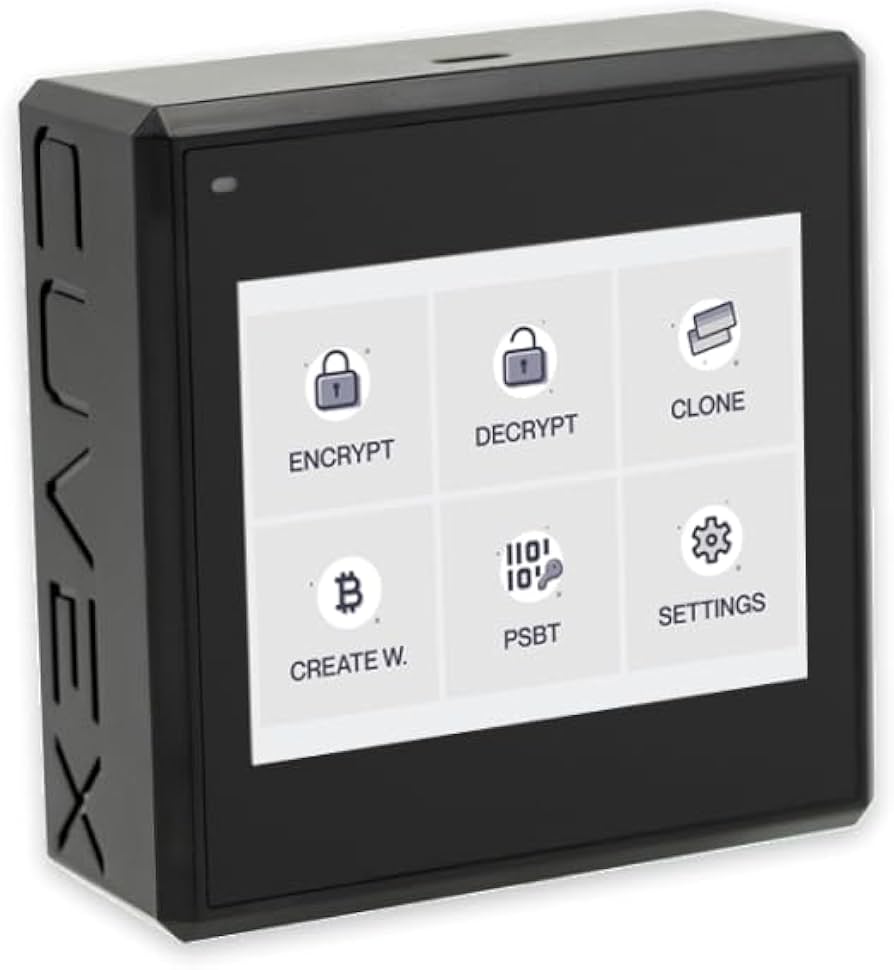

As an Amazon Associate, we may earn from qualifying purchases.
On-chain risk management and rehypothecation controls
Institutional adoption of DeFi prime brokerage hinges on the ability to replicate traditional custodial safeguards within a permissionless ledger environment. The core challenge lies in managing rehypothecation—the practice of reusing collateral to finance other positions—while maintaining full auditability. Unlike centralized finance, where risk is often opaque, on-chain prime brokers must provide granular visibility into collateral velocity and exposure.
Unified margin and collateral optimization
Modern DeFi prime brokers are moving toward unified margining across multiple protocols. This allows institutions to net positions across lending, derivatives, and liquidity pools, reducing capital inefficiency. By aggregating risk at the broker level rather than the protocol level, platforms can offer tighter margin requirements while maintaining solvency buffers. This approach mirrors traditional prime brokerage models but requires sophisticated real-time risk engines to monitor liquidation thresholds across heterogeneous chains.
Rehypothecation controls and audit trails
Rehypothecation remains a primary concern for compliance officers. Institutional-grade platforms now offer configurable rehypothecation limits, allowing clients to opt out of collateral reuse entirely or set strict caps. These controls are enforced via smart contracts that restrict the transfer or reuse of pledged assets unless specific conditions are met. Every rehypothecation event is recorded on-chain, creating an immutable audit trail that satisfies regulatory requirements for collateral segregation and transparency.
Margin call mechanics and liquidation protection
On-chain margin calls differ significantly from traditional markets. Because crypto assets can be volatile and markets operate 24/7, prime brokers must implement automated, real-time margining systems. These systems monitor collateral ratios continuously and trigger margin calls or liquidations when thresholds are breached. To protect institutional clients from slippage and flash crashes, many platforms now offer circuit breakers and pre-authorized liquidation protocols that allow for orderly unwinding of positions rather than abrupt, market-disruptive sales.
On-chain visibility and compliance reporting
Institutional compliance requires more than just security; it demands comprehensive reporting. Prime brokers are integrating on-chain analytics tools that provide real-time visibility into all collateral movements, loan origins, and rehypothecation events. These tools generate compliance-ready reports that map on-chain activity to traditional accounting standards, enabling institutions to satisfy KYC/AML requirements and internal audit protocols without sacrificing the efficiency of decentralized finance.
Regulatory compliance and audit readiness
Institutional adoption of DeFi prime brokerage hinges on the ability to satisfy traditional finance audit requirements. Platforms must provide immutable, granular audit trails that map on-chain activity to off-chain identity and risk decisions. This transparency allows compliance officers to reconstruct transaction histories with the same rigor expected in traditional capital markets.
KYC and AML Integration
Leading platforms integrate Know Your Customer (KYC) and Anti-Money Laundering (AML) checks directly into the onboarding and trading workflow. Rather than treating compliance as a post-trade formality, these systems verify participant identity before granting access to prime services. This integration ensures that every on-chain transaction is associated with a verified legal entity, reducing regulatory exposure for both the broker and the client.
Reporting Standards
For institutions, reporting is not optional; it is a regulatory mandate. Prime brokerage platforms address this by offering standardized reporting formats compatible with traditional accounting and tax systems. These reports detail trade execution, collateral usage, and financing costs, providing the data necessary for internal audits and external regulatory filings. The focus is on accuracy and timeliness, ensuring that financial records reflect the true state of on-chain positions.
Audit Trails
The blockchain itself serves as the primary source of truth for audit trails. However, raw data is often insufficient for human auditors. Effective platforms layer analytical tools on top of the ledger, flagging suspicious patterns and generating compliance-ready documentation. This combination of cryptographic proof and analytical clarity meets the high standards required by legal and regulatory audiences, bridging the gap between decentralized finance and institutional oversight.
Evaluating liquidity and execution quality
For institutional participants, the primary value of a DeFi prime broker lies in its ability to aggregate deep liquidity across fragmented networks. Unlike traditional markets where order books are centralized, DeFi liquidity is siloed across various protocols. A prime brokerage platform must unify these disparate sources to prevent slippage and ensure that large block trades execute at predictable prices.
Execution quality is measured by the platform's capacity to source rates from lending protocols such as Aave and Morpho, while routing trades through decentralized exchanges like Uniswap. August, for example, structures its services to connect clients directly with these underlying networks, allowing for efficient capital deployment in lending and derivative trading without manual interface switching [[src-serp-3]]. This aggregation reduces the operational friction that typically hinders institutional adoption.
In addition to spot liquidity, execution capabilities now extend to leveraged products on high-performance layers. FalconX has introduced leveraged DeFi prime brokerage on Hyperliquid, unifying margin requirements, risk management, and custody into a single workflow. This approach allows institutions to access up to 5x leverage while maintaining strict control over collateral and risk parameters, addressing the custody and margin complexities that often deter traditional finance firms from on-chain trading [[src-serp-7]].
The depth of this aggregated liquidity directly impacts market stability. When prime brokers can draw from a broad pool of capital across multiple chains, they provide the necessary depth to absorb large institutional orders without significant price impact. This capability is essential for maintaining compliance with best execution standards and minimizing counterparty risk in volatile markets.
No comments yet. Be the first to share your thoughts!