
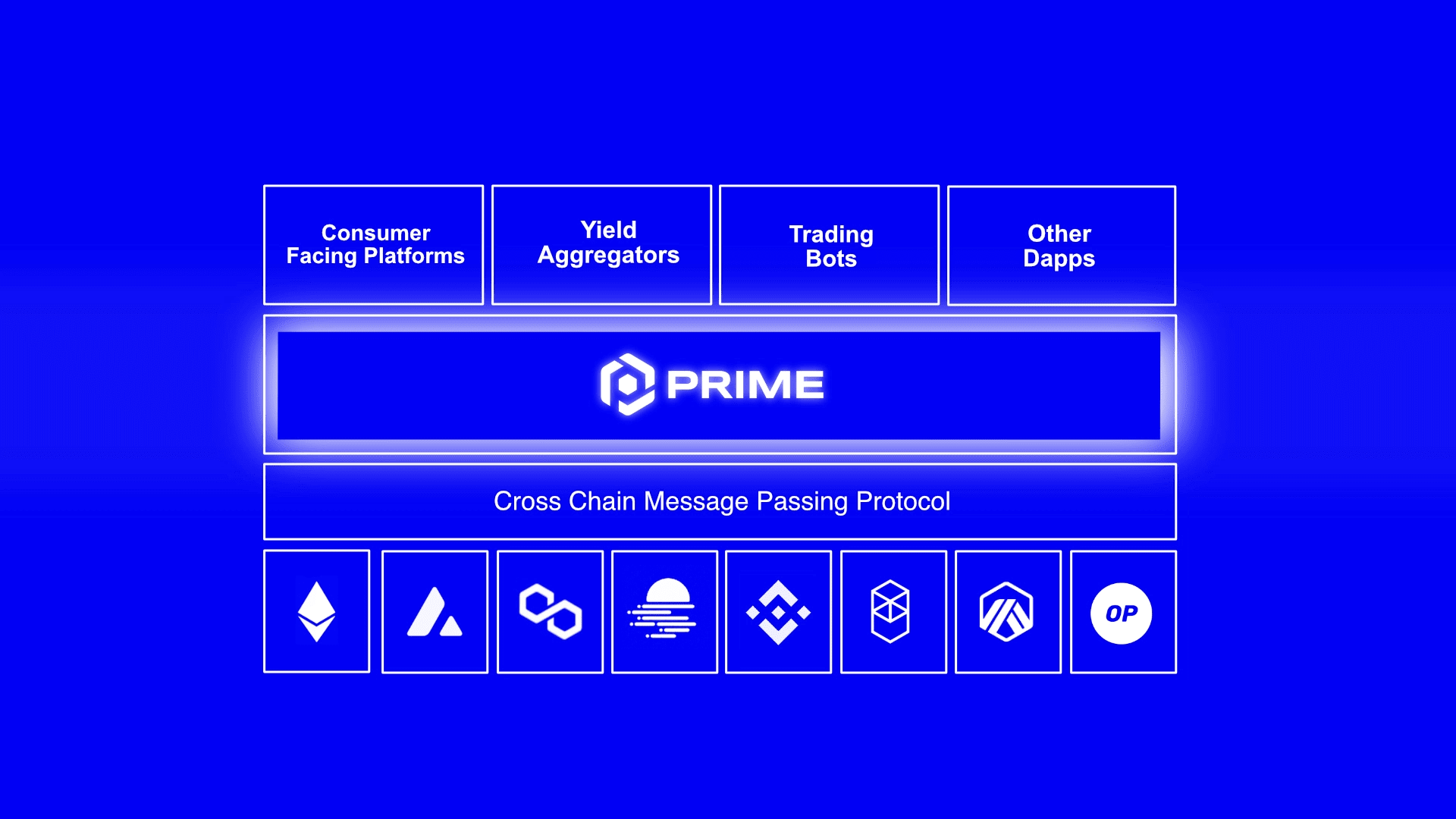
The institutional shift to onchain prime services
By 2026, the architecture of prime brokerage is undergoing a structural migration from legacy financial rails to decentralized finance (DeFi) infrastructure. This transition is not merely technological but regulatory, driven by the need for transparent clearing and financing mechanisms that align with institutional compliance standards. Legacy prime brokers, which traditionally acted as intermediaries for clearing and financing, are now competing with onchain protocols that offer similar functions through smart contracts.
The primary driver for this shift is the demand for yield and the desire for regulatory clarity. Institutions are increasingly seeking onchain prime services that provide verifiable collateralization and real-time risk controls. This demand has led to significant capital inflows into DeFi prime brokerage platforms, as evidenced by recent funding rounds and growth in total value locked (TVL) within these protocols. For example, Ripple’s acquisition of Hidden Road to form Ripple Prime highlights the industry's move toward integrated, multi-asset prime services that bridge traditional finance with crypto-native infrastructure.
The regulatory landscape has also played a pivotal role in this evolution. Clearer guidelines on crypto assets and DeFi protocols have reduced uncertainty for institutional investors, encouraging them to allocate capital to onchain prime services. These services offer advantages such as reduced counterparty risk, improved capital efficiency, and greater transparency, which are critical for institutional adoption. As regulatory frameworks continue to mature, the gap between legacy and onchain prime brokerage is expected to narrow, with onchain solutions potentially becoming the preferred choice for many institutional clients.
Key platforms enabling institutional DeFi access
The DeFi prime brokerage sector in 2026 is defined by a divergence between legacy infrastructure integrators and native on-chain specialists. Institutional capital requires distinct regulatory and operational frameworks, driving a market split between firms that wrap traditional custody and those that build entirely new on-chain accounting layers.
August Prime Brokerage
August operates as a native on-chain infrastructure provider, focusing on the technical friction points of decentralized finance. The platform provides secure smart contract accounts and sophisticated pricing engines designed to replace the opaque settlement processes of traditional exchanges. By embedding risk management directly into the execution layer, August allows institutions to trade DeFi assets with the same counterparty certainty required for regulated markets. The firm recently raised $10 million in a funding round led by prominent institutional investors, signaling continued capital inflow into specialized DeFi trading infrastructure [[src-serp-2]].
FalconX
FalconX remains the largest institutional crypto prime brokerage, leveraging deep liquidity pools and advanced technology solutions to serve the world's top financial institutions. Its value proposition centers on bridging the gap between traditional finance and digital assets through robust custody and financing options. FalconX’s model prioritizes regulatory compliance and operational reliability, making it a primary choice for entities that require seamless integration with existing back-office systems while accessing decentralized markets.
Project 0
Project 0 addresses the specific challenges of managing decentralized finance portfolios through innovative structural solutions. The platform focuses on simplifying the complex mechanics of DeFi, allowing institutions to execute sophisticated strategies without managing the underlying protocol risks manually. By providing a streamlined interface for portfolio management, Project 0 reduces the operational overhead that typically deters traditional firms from entering the space.
Ripple Prime
Ripple Prime represents the convergence of legacy finance and digital assets, established following Ripple’s acquisition of Hidden Road. As the first global, multi-asset prime brokerage owned by a crypto company, it offers a hybrid model that combines the regulatory maturity of traditional prime brokerage with the technological agility of blockchain networks. This structure allows clients to access both centralized and decentralized liquidity through a single, regulated entity.
Platform Comparison
The following table compares the primary institutional value propositions of these key providers.
| Provider | Custody Model | Regulatory Status | Primary Use Case |
|---|---|---|---|
| August | On-chain smart contracts | Specialized DeFi entity | Direct on-chain trading |
| FalconX | Institutional custody | Licensed prime broker | Traditional bridge |
| Project 0 | Portfolio wrappers | Innovative fintech | DeFi portfolio management |
| Ripple Prime | Multi-asset hybrid | Global licensed broker | Multi-asset liquidity |
Regulatory compliance frameworks for 2026
Institutional adoption of DeFi prime brokerage in 2026 is contingent upon adherence to a fragmented but increasingly rigid regulatory landscape. Prime brokerage services, once dominated by traditional banking giants, are evolving to integrate regulated clearing mechanisms for derivatives and standardized compliance protocols. This evolution is not merely operational but structural, requiring prime brokers to act as the primary interface between institutional capital and on-chain liquidity.
MiCA and the European Standard
The Markets in Crypto-Assets (MiCA) regulation serves as the foundational compliance framework for European operations. MiCA mandates strict transparency, capital adequacy, and consumer protection standards for crypto-asset service providers. For prime brokers, this means implementing robust governance structures that mirror traditional financial institutions. Compliance under MiCA is not optional; it is a prerequisite for market access. Institutions operating within the EU must ensure that their DeFi interactions are routed through entities that satisfy these rigorous reporting and auditing requirements.
US Stablecoin Acts and Financial Crime
In the United States, the regulatory focus centers on stablecoin legislation and anti-money laundering (AML) enforcement. Proposed stablecoin acts aim to create a unified federal framework, requiring issuers to maintain 1:1 reserves and submit to regular audits. Simultaneously, the Financial Action Task Force (FATF) Travel Rule continues to enforce the requirement that virtual asset service providers (VASPs) share originator and beneficiary information for transactions above a certain threshold. Prime brokers must integrate these checks into their on-ramp and off-ramp processes to avoid facilitating illicit flows.
Bridging On-Chain and Off-Chain Identity
The core challenge for DeFi prime brokers is reconciling pseudonymous on-chain activity with the real-world identity requirements of regulated entities. Unlike purely on-chain protocols, regulated prime brokers must enforce Know Your Customer (KYC) procedures. This creates a dual-layer system where institutional clients interact with a regulated front-end that handles compliance, while the underlying execution may occur on decentralized exchanges.
This hybrid model allows institutions to access the liquidity and efficiency of DeFi while satisfying the regulatory obligations of their home jurisdictions. The prime broker effectively becomes the compliance gatekeeper, ensuring that every transaction, regardless of its underlying protocol, meets the legal standards of the relevant jurisdiction.
Smart contract auditing and risk management
Institutional-grade DeFi prime brokerage relies on a dual-layer defense to mitigate counterparty and smart contract risk. Unlike traditional finance, where legal recourse is the primary safety net, DeFi infrastructure must enforce security through code and real-time monitoring. Platforms like August Prime Brokerage provide on-chain prime brokerage infrastructure that integrates secure smart contract accounts with sophisticated pricing and risk engines to address these vulnerabilities at the source.
The foundation of this risk management is rigorous smart contract auditing. Before any capital is deployed, the underlying protocols undergo extensive security reviews by independent firms. These audits identify potential vulnerabilities in the codebase, such as reentrancy attacks or oracle manipulation vectors, before they can be exploited. This process is not a one-time event but a continuous cycle of review, especially when protocols upgrade or integrate new assets. For institutional clients, the audit report serves as a critical due diligence document, offering transparency into the technical integrity of the assets they are trading or lending.
Beyond static audits, dynamic risk management is essential for mitigating counterparty risk. Prime brokers employ real-time risk engines that monitor collateral health, liquidity depths, and market volatility. These systems can trigger automatic liquidations or margin calls if a position falls below predefined thresholds, preventing the accumulation of toxic debt. This automated oversight ensures that the prime broker’s balance sheet remains solvent even during periods of extreme market stress, a scenario where traditional clearinghouses might face significant delays or failures.
Rehypothecation controls further distinguish institutional DeFi from retail platforms. In traditional finance, rehypothecation allows brokers to reuse client collateral to finance other activities, which can amplify systemic risk. DeFi prime brokers implement strict, transparent controls over rehypothecation, often requiring explicit consent from the client for any reuse of assets. This approach maintains a clear separation between client assets and the broker’s operational capital, reducing the risk of commingling and ensuring that client funds are available for withdrawal or trading at all times.
| Feature | Traditional PB | DeFi PB |
|---|---|---|
| Security Basis | Legal contracts | Smart contract audits |
| Risk Monitoring | Periodic reviews | Real-time engines |
| Collateral Reuse | Implicit rehypothecation | Explicit consent controls |
Liquidity Access and Capital Efficiency
DeFi prime brokers bridge the gap between traditional finance infrastructure and decentralized markets, offering deep liquidity pools that were previously inaccessible to institutional participants. Platforms like FalconX and August Digital provide the necessary on-chain prime brokerage infrastructure, including secure smart contract accounts and sophisticated risk engines, to facilitate large-scale trading without slippage [src-serp-3][src-serp-4]. This structural shift allows institutions to execute complex strategies with the speed and transparency inherent to blockchain networks.
Capital efficiency is achieved through advanced margining and lending mechanisms that optimize balance sheets. Unlike traditional finance, where capital is often siloed, DeFi protocols enable cross-asset collateralization and real-time liquidation logic. This reduces the amount of idle capital required to maintain positions, allowing firms to deploy funds more effectively across multiple venues. The result is a trading environment that mirrors the sophistication of legacy prime brokerage while leveraging the composability of decentralized finance.
The integration of these services requires rigorous regulatory compliance and risk management frameworks. Prime brokers must ensure that liquidity sources are robust and that counterparty risks are mitigated through transparent on-chain verification. As the market matures, the ability to access deep liquidity efficiently will remain a critical differentiator for institutional players seeking to manage the complexities of digital asset markets.
No comments yet. Be the first to share your thoughts!