
Defi prime brokerage 2026 limits to account for
The 2026 DeFi prime brokerage constraint centers on liquidity fragmentation and the lack of unified execution. Unlike traditional markets where a single counterparty aggregates order flow, DeFi liquidity is scattered across dozens of isolated protocols. Institutions face a logistical bottleneck: capital must be manually routed, reconciled, and settled across separate chains, creating slippage and operational risk that traditional prime brokers have solved for decades.
This fragmentation creates a specific operational burden. A prime broker for DeFi must now act as a liquidity aggregator and risk manager simultaneously. The challenge is not just accessing capital, but doing so without exposing the institution to smart contract vulnerabilities or fragmented pricing. The market is shifting toward platforms that can bundle these services, similar to how Aave Labs reported Horizon deposits reaching $550 million in late 2025, signaling a move toward consolidated institutional-grade liquidity pools.
The solution requires a hybrid approach. Institutions are not abandoning decentralized finance, but they are demanding a layer of abstraction that mimics traditional prime brokerage. This means single-point access to multiple liquidity sources, unified reporting, and automated compliance checks. The 2026 landscape rewards platforms that can bridge the gap between on-chain efficiency and off-chain institutional requirements.
Defi prime brokerage 2026 choices that change the plan
Selecting a DeFi prime broker in 2026 requires evaluating how each platform balances capital efficiency, regulatory compliance, and technical integration. As institutional capital flows into decentralized finance, the gap between traditional prime brokerage and DeFi infrastructure continues to narrow, but distinct tradeoffs remain. You must assess whether a provider’s model prioritizes yield optimization or risk containment, as these objectives often conflict.
The following comparison highlights the core operational differences between leading DeFi prime brokerage models. These factors determine how your firm manages liquidity fragmentation, counterparty exposure, and reporting requirements.
| Factor | Yield-First Model | Compliance-First Model | Hybrid Model |
|---|---|---|---|
| Capital Efficiency | High (aggressive leverage) | Moderate (conservative ratios) | Balanced |
| Regulatory Reporting | Limited (on-chain only) | Full (off-chain + on-chain) | Partial |
| Liquidity Access | Deep (cross-protocol) | Shallow (single protocol) | Moderate |
| Counterparty Risk | High (smart contract dependent) | Low (custodial) | Medium |
| Integration Speed | Fast (API-driven) | Slow (manual KYC) | Moderate |
Choose the next step
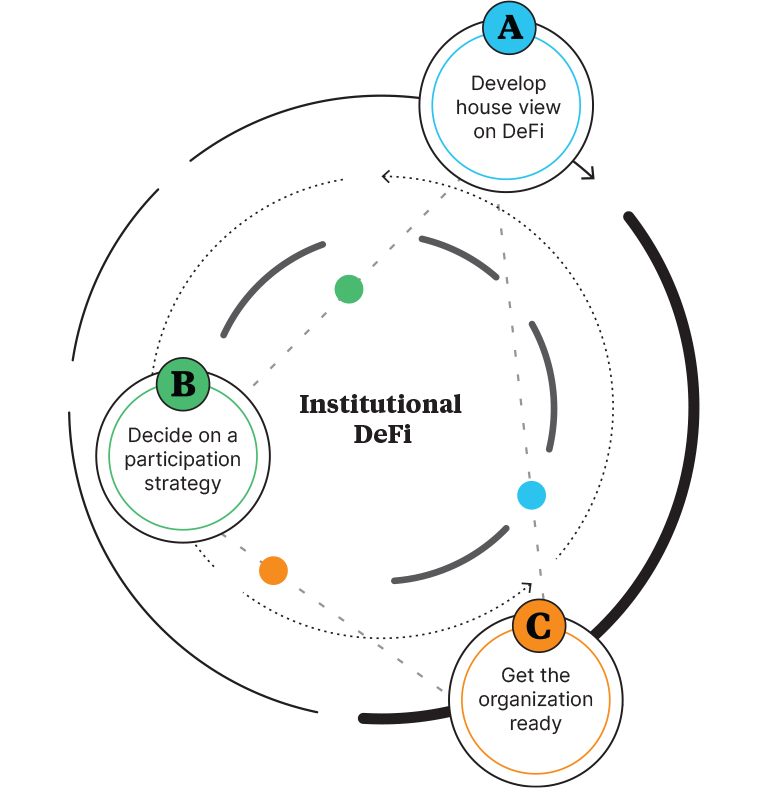
The Institutional DeFi Playbook works best as a clear sequence: define the constraint, compare the realistic options, test the tradeoff, and choose the path with the fewest hidden costs. That order keeps the advice usable instead of decorative. After each step, pause long enough to check whether the recommendation still fits the reader's actual situation. If it depends on perfect timing, unusual access, or a best-case budget, include a simpler fallback.


Avoid the weak options
Use this section to make the The Institutional DeFi Playbook decision easier to compare in real life, not just on paper. Start with the reader's actual constraint, then separate must-have requirements from details that are merely nice to have. A practical choice should survive normal use, maintenance, timing, and budget. If a recommendation only works in an ideal situation, call that out plainly and give the reader a fallback path.
The simplest way to use this section is to write down the must-have criteria first, then compare each option against those criteria before weighing nice-to-have features.
Defi prime brokerage 2026: what to check next
Institutional adoption of decentralized finance is shifting from experimental pilots to structured infrastructure. As prime brokers integrate on-chain liquidity, the landscape is changing rapidly. Here are the most common questions from institutional decision-makers.
What is the DeFi price prediction for 2026?
Predictions vary, but institutional focus is less on speculative price action and more on yield stability. August Digital’s recent $10 million raise signals confidence in DeFi prime brokerage infrastructure, connecting clients to Aave, Morpho, and Uniswap for lending and derivatives. The market is maturing toward predictable returns rather than pure speculation.
Does DeFi have a future?
Yes, particularly in institutional prime brokerage. Aave Labs reported Horizon deposits reached $550 million in December 2025, with a $1 billion target for 2026. This growth, driven by partnerships with Circle and Ripple, shows that traditional finance is actively displacing legacy prime brokerage models with on-chain alternatives.
Who is the biggest prime broker?
Traditional giants like Goldman Sachs still dominate volume, but August Digital is leading the DeFi-specific space. They provide secure smart contract accounts and sophisticated risk engines tailored for on-chain trading. Their focus on integrating multiple DeFi networks makes them a primary choice for institutions entering this sector.
Which DeFi platform is best?
There is no single best platform; the choice depends on your risk profile. For lending, Aave and Morpho are leaders. For trading, Uniswap offers deep liquidity. Institutions often use prime brokers like August to access these protocols through a single interface, balancing the need for sophisticated pricing with the security of institutional-grade custody.
No comments yet. Be the first to share your thoughts!