
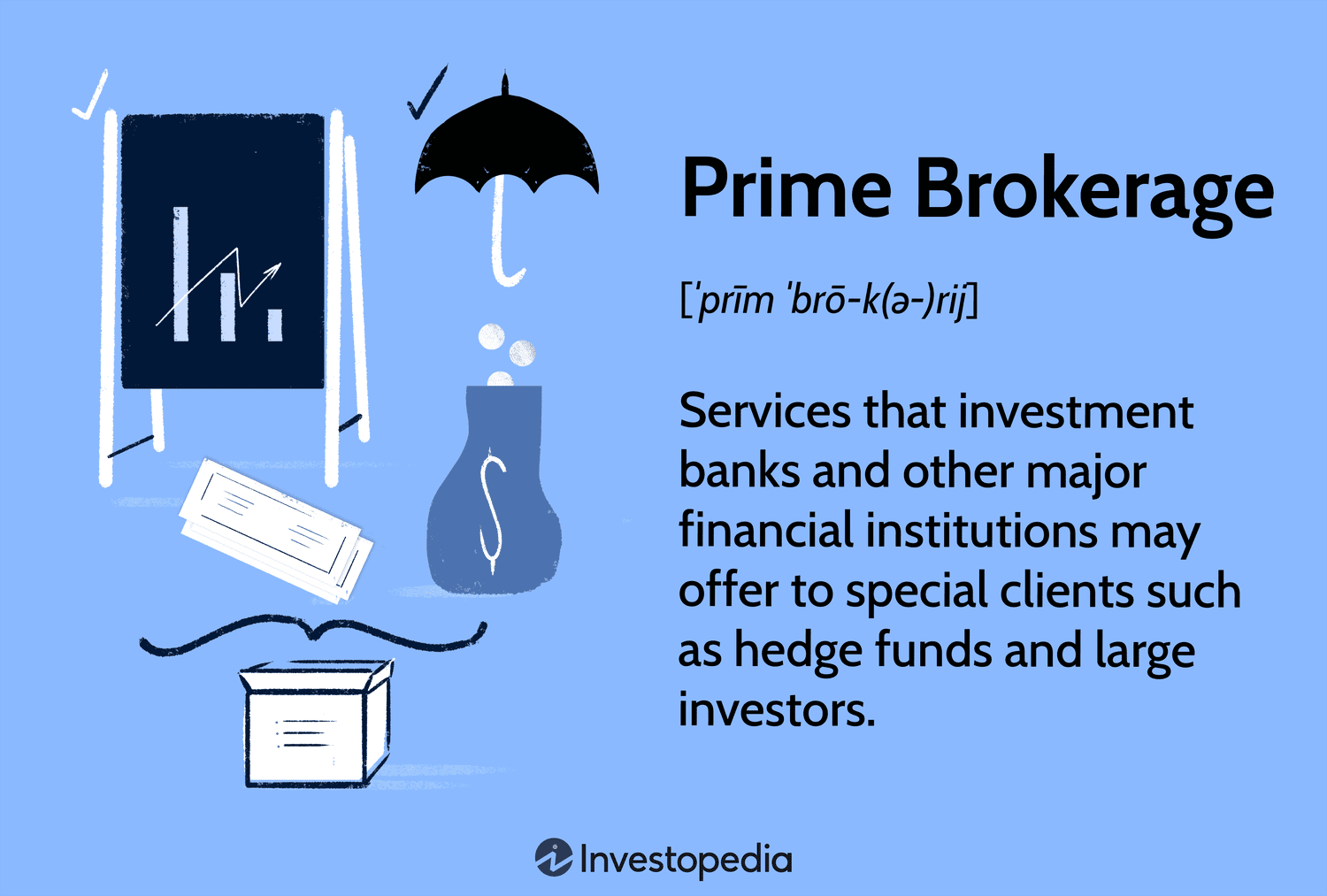
How AI changes DeFi prime brokerage
Traditional prime brokerage relied on manual checks and fragmented data to manage risk. AI-driven onchain solutions replace this friction with automated logic, shifting the industry from reactive reporting to real-time execution.
At the center of this shift is AI in DeFi prime brokerage. AI agents now monitor margin requirements and track collateral eligibility automatically, providing hedge funds with immediate visibility into their risk profiles without waiting for end-of-day reports.
Beyond margin, AI enhances FX prime brokerage by analyzing execution data and monitoring liquidity. By tracking intraday risk and detecting anomalies, these systems prevent costly errors before they impact the portfolio, creating a more resilient infrastructure that scales with market volatility.
Top AI agents for risk and collateral
AI in DeFi prime brokerage has shifted from abstract modeling to active monitoring. Hedge funds now rely on specialized agents to track margin requirements and collateral eligibility in real time. These tools reduce the lag between market movement and risk assessment, a critical advantage in volatile crypto markets.
V7 Go
V7 Go’s AI agent automates margin requirement monitoring and collateral eligibility tracking for hedge fund portfolios. It delivers real-time risk visibility, allowing relationship managers to react to margin calls before they become operational bottlenecks. The system integrates directly with prime brokerage workflows to flag non-compliant assets instantly.
StoneX Pro
StoneX Pro leverages AI to support FX prime brokerage by analyzing execution data and monitoring liquidity. Its AI capabilities extend to intraday risk and margin tracking, identifying anomalies that traditional models might miss. This approach helps prime brokers manage complex multi-asset portfolios with greater precision and less manual oversight.
| Feature | V7 Go | StoneX Pro |
|---|---|---|
| Margin Monitoring | Automated real-time | Intraday tracking |
| Collateral Eligibility | Automated tracking | Liquidity analysis |
| Anomaly Detection | Basic flagging | Advanced AI analytics |
AI in DeFi prime brokerage for smart order routing
Smart order routing has become the central nervous system of AI in DeFi prime brokerage. Instead of sending a single large trade to one venue, AI algorithms slice orders and route them across multiple decentralized exchanges and liquidity pools simultaneously. This approach minimizes market impact and significantly reduces slippage, which is critical for institutional-grade execution.
Platforms like August Capital and Ripple Prime are integrating these AI-driven routing capabilities directly into their prime brokerage services. By connecting clients with networks such as Aave, Morpho, and Uniswap, these services allow for regulated clearing of derivatives while leveraging DeFi liquidity. The AI component dynamically analyzes real-time gas costs, pool depths, and price impact to determine the most efficient path for execution.
This dynamic routing transforms how large trades are handled. Rather than suffering from fragmented liquidity across different chains or protocols, the AI system treats the entire DeFi ecosystem as a unified liquidity layer. It constantly recalculates the optimal split of orders to ensure the best possible average price for the client.
The result is a more resilient execution environment. Even if one pool experiences a temporary dip in liquidity or a spike in fees, the AI reroutes the remaining order flow to healthier venues instantly. This adaptability is what separates modern AI in DeFi prime brokerage from traditional, static routing methods used in earlier crypto trading platforms.

As an Amazon Associate, we may earn from qualifying purchases.
Integrating AI with existing prime brokers
The most practical path for institutions adopting AI in DeFi prime brokerage is not to replace established infrastructure, but to layer intelligent execution on top of it. Platforms like Ripple Prime and August already provide the necessary custody, clearing, and legal wrappers. The value of AI here is operational: automating the routing of orders across fragmented liquidity pools to achieve the best execution price.
Ripple Prime, formed through the acquisition of Hidden Road, offers a multi-asset environment that serves as a stable foundation for AI-driven strategies. By connecting AI execution engines to Ripple Prime’s infrastructure, firms can automate complex cross-chain rebalancing while relying on a regulated entity for settlement. This setup reduces the operational risk of managing private keys across multiple protocols.
Similarly, August acts as a critical bridge between traditional prime brokerage and DeFi networks. August connects clients to lending and trading on Aave, Morpho, and Uniswap. AI tools can monitor these DeFi markets in real-time, identifying yield opportunities or arbitrage spreads that human traders might miss. The AI handles the frequency and speed of DeFi interactions, while August provides the institutional-grade access and reporting required for compliance.
This hybrid approach allows firms to leverage the speed of decentralized finance without sacrificing the security and legal protections of a prime broker. The AI becomes the brain, and the prime broker becomes the body, combining computational power with institutional trust.
Choosing the right AI solution for your needs
Selecting AI in DeFi prime brokerage requires matching specific operational pain points to proven tool capabilities. Rather than adopting broad, abstract platforms, focus on concrete integrations that handle margin monitoring, collateral eligibility, and intraday risk tracking. The right solution acts as a force multiplier for your existing infrastructure, not a replacement for it.
Evaluate tools based on three non-negotiable criteria: security architecture, API integration depth, and use-case specificity. Security must extend beyond basic encryption to include real-time anomaly detection and automated compliance reporting. Integration capabilities should allow seamless data flow between your trading execution engines and risk management dashboards without manual reconciliation.
Prioritize vendors that demonstrate clear value in high-frequency or high-volume scenarios. For instance, solutions like V7 Go’s AI agent automate margin requirement monitoring, providing real-time risk visibility that traditional systems often miss. Similarly, platforms like Ripple Prime leverage AI for multi-asset liquidity monitoring, essential for managing complex DeFi portfolios. Avoid tools that promise general "AI insights" without specifying how they reduce operational latency or improve capital efficiency in your specific trading strategy.
Frequently asked questions about AI in DeFi prime brokerage
How does AI improve security in DeFi prime brokerage?
AI automates margin requirement monitoring and collateral eligibility tracking, providing real-time risk visibility for hedge fund portfolios. By continuously analyzing transaction patterns, these systems detect anomalies and potential fraud before they escalate, replacing manual checks with instant, algorithmic oversight.
Can AI agents fully replace relationship managers?
AI agents handle the heavy lifting of data aggregation and initial risk assessment, but they cannot replicate the nuanced negotiation and trust-building required for high-value institutional relationships. Tools like V7 Go’s AI agent deliver the metrics, while human managers interpret the strategy and secure the partnership.
Is AI integration complex for existing DeFi platforms?
Integration is becoming streamlined as major players adopt standardized protocols. Ripple Prime, for instance, leverages its acquisition of Hidden Road to offer a unified, multi-asset prime brokerage infrastructure that supports AI-driven execution analytics and liquidity monitoring without requiring custom, fragmented coding.
What are the primary risks of using AI in this sector?
The main risk is over-reliance on predictive models that may not account for extreme market volatility or novel smart contract vulnerabilities. While AI enhances execution analytics and intraday risk tracking, it cannot guarantee outcomes in unregulated or highly volatile DeFi environments, requiring constant human supervision.
No comments yet. Be the first to share your thoughts!