
Defining the 2026 DeFi Prime Brokerage Model
DeFi prime brokerage in 2026 is no longer a speculative concept but a functional infrastructure layer designed to bridge decentralized liquidity with institutional-grade risk management. Unlike traditional centralized finance (CeFi) prime brokers that rely on siloed custodial balances and opaque internal ledgers, 2026-era DeFi prime brokers operate as on-chain intermediaries. They aggregate liquidity across multiple decentralized exchanges (DEXs) and lending protocols to execute trades with minimal slippage, while simultaneously managing collateral efficiency through unified margin systems.
The core distinction lies in how capital is utilized. In a CeFi model, assets locked in one trading pair or lending position are often frozen, preventing their use as collateral elsewhere. DeFi prime brokerage solves this fragmentation by enabling unified margin capabilities. This allows institutions to post a single pool of collateral that supports multiple open positions across different markets, significantly reducing the capital required to maintain leverage. This efficiency is critical for high-frequency trading firms and market makers who require maximum capital velocity.
To illustrate the current market baseline for these infrastructure tools, we can observe the performance of the broader crypto market, which serves as the underlying asset class for most prime brokerage activity.
This model relies on smart contract architecture that automates liquidation checks and risk exposure monitoring in real-time. By removing the counterparty risk inherent in centralized intermediaries, DeFi prime brokers offer a transparent, auditable alternative. As noted by industry leaders like MacBrennan Peet of Project 0, the 2026 landscape is defined by the integration of these native DeFi primitives into a cohesive service layer that mirrors the functionality of Wall Street prime brokers without the custodial bottlenecks [[src-serp-7]].
The result is a system where liquidity is not just aggregated but optimized. Institutions can access deep order books across Ethereum, Solana, and other chains through a single interface, while the underlying risk engine ensures that margin requirements are calculated dynamically based on real-time volatility. This approach transforms DeFi from a speculative trading environment into a viable institutional infrastructure, capable of supporting the scale and security requirements of traditional finance.
CeFi vs DeFi Prime Brokerage Structures
Institutional infrastructure for digital assets has split into two distinct models: centralized prime brokerage (CeFi) and DeFi-native aggregation. CeFi platforms like FalconX act as traditional intermediaries, providing deep liquidity, financing, and advanced technology solutions to top institutions through a single point of contact. In contrast, emerging DeFi-native solutions, such as those integrated by August, connect clients directly to decentralized networks like Aave, Morpho, and Uniswap for lending and derivative trading.
The core difference lies in how custody, margining, and counterparty risk are managed. CeFi models offer a familiar institutional experience with centralized custody and unified margining across assets, reducing operational friction but introducing single-point failure risks. DeFi-native structures distribute custody across smart contracts and leverage on-chain liquidity pools, requiring sophisticated technical oversight but eliminating traditional counterparty exposure. This shift demands that institutions adapt their risk controls from legal counterparty assessments to code audit and protocol transparency reviews.
| Feature | CeFi Prime | DeFi Native |
|---|---|---|
| Custody | Centralized (Custodial) | Decentralized (Self-Custody/Smart Contract) |
| Liquidity Access | Aggregated OTC & Order Books | On-Chain Pools (e.g., Aave, Uniswap) |
| Margining | Unified Margin Across Assets | Collateralized Per-Protocol Positions |
| Counterparty Risk | High (Intermediary Default) | Low (Code/Protocol Risk) |
| Regulatory Status | Licensed & Compliant | Emerging & Variable |
For institutions prioritizing regulatory clarity and operational simplicity, CeFi remains the dominant choice. However, as DeFi infrastructure matures, the appeal of direct market access and reduced intermediary risk is driving a hybrid approach. The landscape is evolving toward solutions that combine the user experience of CeFi with the transparency and efficiency of DeFi protocols.
Unified Margin and Rehypothecation Controls
Unified margining is the structural backbone of institutional DeFi prime brokerage, replacing the fragmented collateral requirements of early crypto lending with a holistic risk framework. In 2026, protocols aggregate diverse assets—such as staked ETH, liquid staking tokens, and major stablecoins—into a single risk pool. This allows institutions to offset positions across different markets, reducing the capital required to maintain leverage while maximizing balance sheet efficiency.
The mechanism relies on real-time correlation modeling. Instead of treating each asset in isolation, the margin engine calculates the net exposure of the entire portfolio. If an institution holds a long position in one asset and a short in another with high correlation, the margin requirement is adjusted to reflect the reduced overall risk. This dynamic adjustment prevents the over-collateralization that historically capped institutional participation in DeFi.
Rehypothecation—the practice of reusing posted collateral to finance other activities—introduces significant counterparty risk. For legal and compliance teams, the opacity of how collateral is deployed is a primary concern. 2026 protocols address this by implementing transparent rehypothecation controls, often governed by smart contracts that restrict reuse to specific, pre-approved activities.
These controls ensure that collateral reuse does not compromise the primary lender's ability to liquidate positions during market stress. By locking specific portions of collateral or requiring over-collateralization ratios for reused assets, protocols maintain solvency even if the rehypothecation chain breaks. This transparency is critical for institutional adoption, as it aligns DeFi mechanics with the risk management frameworks used in traditional prime brokerage.
Regulatory Compliance and Smart Contract Risk
Institutional adoption of DeFi prime brokerage in 2026 is no longer driven by speculative yield, but by the ability to navigate a fragmented and evolving regulatory landscape. Institutions require infrastructure that satisfies strict legal mandates while maintaining the efficiency of on-chain settlement. This dual requirement forces a convergence of traditional compliance frameworks with decentralized protocol mechanics.
Navigating the Regulatory Framework
The regulatory environment for crypto prime brokerage has shifted from ambiguity to structured enforcement. Institutions must now operate within defined jurisdictions, requiring robust Know Your Customer (KYC) and Anti-Money Laundering (AML) integration at the protocol level. Unlike centralized exchanges, DeFi prime brokers must implement compliance layers that do not compromise the underlying asset custody. This often involves using permissioned liquidity pools or identity-verified smart contracts that restrict access to accredited investors.
The convergence of CeFi and DeFi, as highlighted by industry leaders at the Crypto Finance Forum London 2026, emphasizes the need for hybrid models. These models allow institutions to benefit from DeFi’s composability while adhering to traditional financial reporting standards. The focus is on transparency and auditability, ensuring that every transaction can be traced back to a verified entity without exposing sensitive client data on public ledgers.
Managing Smart Contract Risk
Smart contract risk remains the primary technical barrier to institutional entry. Prime brokers mitigate this through rigorous auditing, formal verification, and the use of battle-tested protocols. Institutions typically allocate capital only to protocols with multi-year track records and substantial insurance coverage. The integration of AI-driven monitoring tools allows for real-time detection of anomalous behavior, providing an additional layer of defense against exploits.
Unified margin systems play a critical role in risk management. By allowing assets across different chains and protocols to serve as collateral, prime brokers can optimize capital efficiency while maintaining strict loan-to-value ratios. This system requires precise oracle data and liquidation mechanisms that function reliably during market volatility. The technical complexity of these systems demands constant monitoring and rapid response capabilities to prevent cascading failures.
The Role of Infrastructure
The infrastructure supporting DeFi prime brokerage is becoming increasingly sophisticated. Institutions rely on specialized nodes and data aggregators to ensure accurate pricing and settlement. The integration of cross-chain compatibility, a major trend for 2026, allows for seamless asset movement without exposing clients to bridge risks. This capability is essential for diversifying collateral and accessing liquidity across multiple ecosystems.
As the industry matures, the distinction between traditional finance and DeFi continues to blur. Prime brokers are acting as the bridge, translating institutional requirements into on-chain actions. This process requires a deep understanding of both legal constraints and technical possibilities. The success of this model depends on the ability to provide secure, compliant, and efficient services that meet the high standards of institutional investors.
Key Players and Market Adoption Trends
Institutional adoption of DeFi prime brokerage services in 2026 is being driven by a convergence of legacy infrastructure providers and specialized native DeFi platforms. The market is no longer defined by speculative protocols but by entities offering the deep liquidity, regulatory compliance, and risk management tools required by traditional finance.
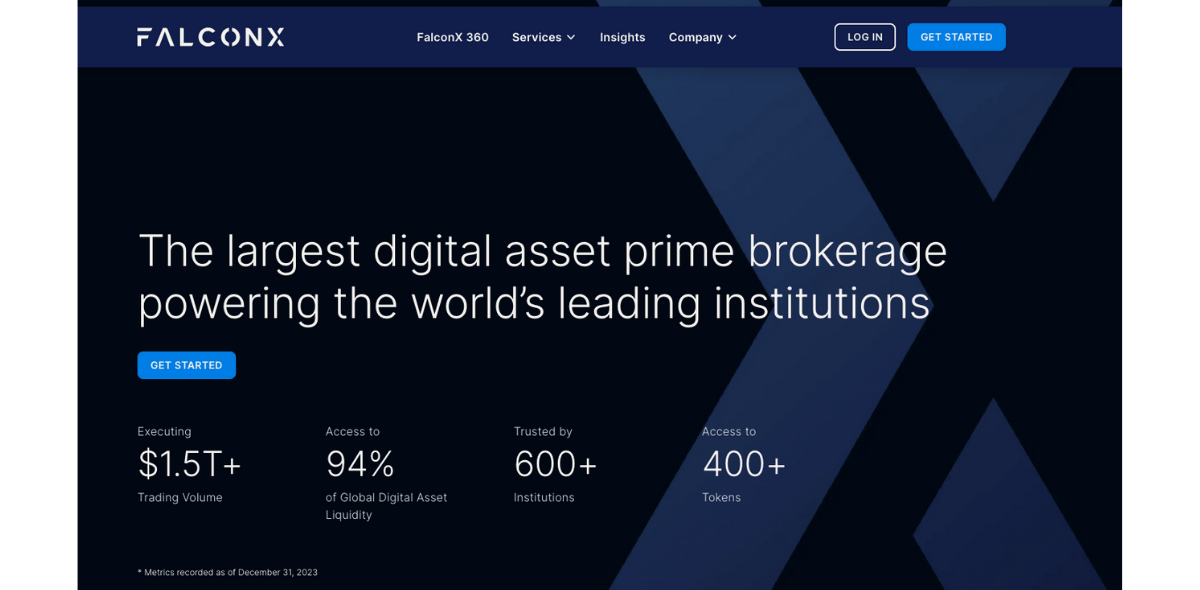
FalconX has established itself as the largest institutional crypto prime brokerage, providing the deep liquidity and financing solutions that top institutions require. Its dominance stems from its ability to bridge traditional market structures with digital asset infrastructure, offering advanced technology solutions that satisfy strict internal compliance mandates. For institutions seeking a single point of contact for execution and custody, FalconX represents the current standard for institutional-grade prime services.
Simultaneously, specialized firms like August are emerging to address the specific mechanics of DeFi lending and trading. August’s recent capital raise highlights the growing investor interest in platforms that connect clients directly to DeFi networks such as Aave, Morpho, and Uniswap. These platforms are not merely trading venues; they are infrastructure layers that facilitate complex strategies like unified margin and cross-protocol lending, which were previously inaccessible to traditional asset managers.
The broader market trend points toward the integration of artificial intelligence and cross-chain compatibility as the primary drivers of DeFi’s resurgence. As interest rates influence the appeal of yield-bearing assets, prime brokers are increasingly focused on providing the technological backbone that allows institutions to navigate these multi-chain environments safely. This shift marks a transition from experimental DeFi usage to a mature, infrastructure-heavy ecosystem where reliability and auditability are paramount.
No comments yet. Be the first to share your thoughts!