
Defining on-chain prime services in 2026
DeFi prime brokerage in 2026 is no longer a speculative experiment; it is the operational backbone for institutional capital entering decentralized markets. Unlike traditional CeFi prime brokers, which rely on opaque balance sheets and bilateral credit lines, on-chain prime services offer transparent, programmable access to deep liquidity pools. This shift allows institutions to execute large trades with minimal slippage while maintaining custody and auditability on public ledgers.
The convergence of institutional liquidity access and RWA tokenization defines this new era. As real-world assets like treasuries and private credit are tokenized, they enter DeFi protocols that were previously limited to volatile crypto-native assets. Prime brokers now serve as the critical interface, aggregating these disparate liquidity sources and providing the necessary credit facilities to leverage positions across both digital and traditional asset classes.
This infrastructure change marks a departure from the fragmented liquidity of 2025. The Block’s 2026 DeFi Outlook notes that discernible credit cycles and growing institutional inflows are maturing the sector. Prime services are the mechanism that enables this maturity, offering the risk management tools, borrowing rates, and execution speeds that institutions require to deploy capital at scale.
By bridging the gap between traditional finance’s need for stability and DeFi’s efficiency, on-chain prime brokerage creates a unified market for liquidity. Institutions can now access the same deep order books previously reserved for market makers, democratizing access while reducing counterparty risk through smart contract verification rather than reliance on third-party intermediaries.
Comparing prime brokerage models
Institutional capital is shifting toward DeFi prime brokerage platforms that offer direct on-chain access, lower costs, and automated custody. Unlike traditional CeFi models, which often rely on opaque lending books and segregated custody, DeFi prime brokers integrate liquidity sources like Aave, Morpho, and Uniswap into a single execution layer. This structural difference impacts cost, leverage efficiency, and risk management.
The market is currently defined by three emerging models: August, Project 0, and Horizon. Each targets slightly different institutional needs, from high-frequency trading to long-term yield generation. Understanding their distinct architectures is essential for allocating capital in 2026.
| Feature | August | Project 0 | Horizon |
|---|---|---|---|
| Core Model | DeFi Aggregator | CeFi/DeFi Hybrid | Institutional Lending |
| Primary Liquidity | Aave, Morpho, Uniswap | Perpetuals & Spot | Circle, Ripple |
| Custody | Non-custodial/Multi-sig | Hybrid Custody | Institutional Grade |
| Leverage Source | On-chain Lending Pools | Proprietary Book | Direct Deposit Yields |
| Scale (2025) | Seed Stage ($10M Raised) | Expansion Phase | $550M Deposits |
August focuses on connecting clients directly with DeFi networks, raising $10 million to build infrastructure that aggregates lending and derivative trading across protocols like Aave and Morpho. This model prioritizes transparency and non-custodial execution, appealing to protocols that require on-chain visibility. In contrast, Project 0 is expanding its perpetual markets and integrating more assets, aiming to bridge Wall Street prime brokerage standards with DeFi accessibility.
Horizon, backed by Aave Labs, represents the institutional lending side of the spectrum. With $550 million in deposits by December 2025 and a 2026 target of $1 billion, Horizon partners with major stablecoin issuers like Circle and Ripple. Its model is less about trading execution and more about providing deep, stable liquidity for large-scale capital deployment.
RWA tokenization trends and liquidity
Real-world asset (RWA) tokenization is shifting from experimental pilot programs to a core component of institutional liquidity infrastructure. As tokenized treasuries, private credit, and real estate enter DeFi protocols, the demand for prime brokerage services is accelerating. Institutions require the same sophisticated collateral management and cross-asset margining tools they use in TradFi, but applied to a hybrid on-chain and off-chain balance sheet.
The mechanism is straightforward but complex to execute. Tokenized assets serve as high-quality collateral, allowing institutions to unlock liquidity without selling their underlying holdings. This creates a circular economy where RWA yields can be leveraged against stablecoins or other digital assets. However, this requires robust valuation feeds and risk engines that can handle the volatility and illiquidity risks inherent in private markets.
Market data reflects this maturation. Aave Labs reported Horizon deposits reaching $550 million in December 2025, with a target of $1 billion for 2026, signaling strong institutional appetite for tokenized yield [src-serp-4]. This growth is part of a broader trend where DeFi credit cycles are becoming more discernible and institutional inflows are increasing [src-serp-8].
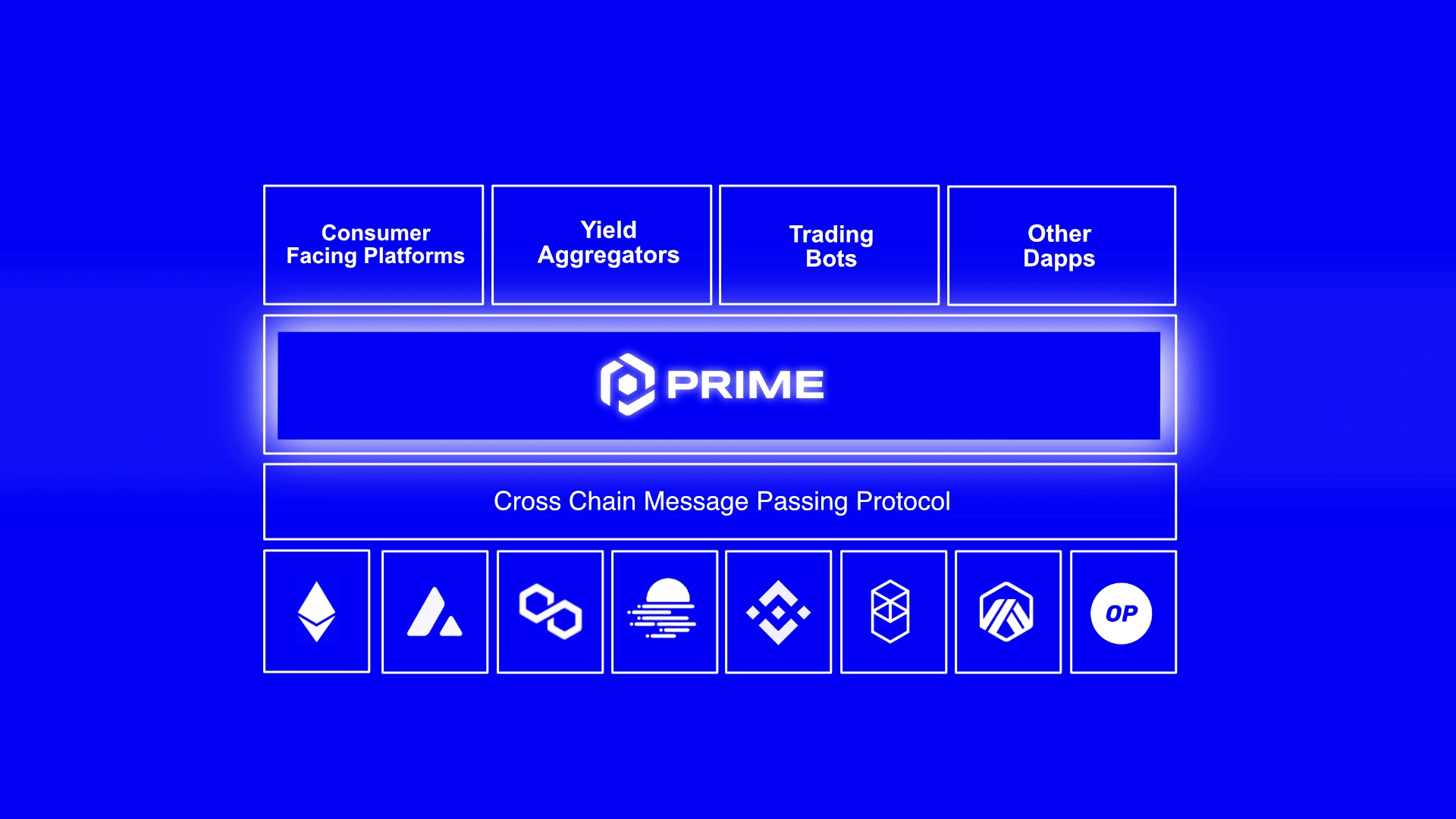
Prime brokers are now essential intermediaries in this space. They provide the necessary infrastructure to bridge the gap between traditional custody solutions and on-chain execution. By offering cross-asset margining, they allow institutions to optimize capital efficiency across their digital and traditional portfolios. This integration is critical for the next phase of DeFi adoption, where liquidity depth and risk management are paramount.
Margin and rehypothecation controls
Institutional prime brokerage in DeFi 2026 is defined by how collateral is managed, not just how it is moved. The primary challenge for institutional clients is reconciling the immutable nature of on-chain code with the flexible, often opaque risk controls required by regulated entities. Margin requirements must be dynamic, adjusting to volatility in real-time, while rehypothecation controls determine whether a prime broker can reuse client assets to provide liquidity elsewhere in the system.
Unlike traditional finance, where margin calls are administrative events, DeFi margin calls are often automated via smart contracts. This requires precise oracle integration and over-collateralization buffers to prevent liquidation cascades. For RWA-backed loans, where asset valuation is less liquid than Bitcoin or Ethereum, margin ratios are typically stricter. The system must account for the lag in off-chain asset verification, ensuring that the collateral value remains sufficient even if the underlying real-world asset experiences settlement delays.
Rehypothecation—the practice of reusing client collateral to finance other trades or provide liquidity to protocols—is the most contentious aspect of prime brokerage. In CeFi, this practice was central to profitability but led to catastrophic failures when transparency was lacking. In DeFi, rehypothecation is either fully transparent on-chain or strictly prohibited by protocol design. Institutional clients demand clear visibility into where their collateral is deployed.
The regulatory landscape is pushing for "segregated custody" models where client assets are ring-fenced from the prime broker’s operational funds. This means that while margin can be dynamically adjusted, the principal collateral cannot be freely rehypothecated without explicit, signed consent. This shift aligns DeFi practices with MiCA and US regulatory expectations, making prime brokerage services viable for large-scale institutional capital that cannot tolerate hidden leverage.
This technical framework ensures that liquidity providers can offer deep markets without exposing prime brokerage clients to systemic risk. The integration of real-time margin monitoring with strict rehypothecation controls creates a hybrid model that satisfies both the efficiency needs of DeFi and the compliance requirements of institutional finance.
Crypto market outlook for 2026
The broader crypto landscape is shifting from speculative experimentation to structural maturity. As DeFi integrates deeper with traditional finance, the gap between institutional and retail privacy is widening. Institutions require auditable, compliant rails, while retail traders continue to prioritize anonymity and permissionless access.
Stablecoins are on track to hit at least $500 billion in market cap next year, with a long-term path toward $2 trillion. This growth is fueled by their increasing use in cross-border settlements and as a base layer for yield-bearing products. Perpetual futures also maintain strong momentum, serving as the primary hedging tool for both retail and institutional participants navigating market volatility.
Frequently asked questions about DeFi prime brokerage
What is the outlook for crypto in 2026?
Institutional adoption is accelerating, with stablecoins projected to reach at least $500 billion in 2026 and a long-term path toward $2 trillion. The gap between institutional and retail access to privacy features will likely widen, while perpetual futures continue to gain momentum as a core liquidity layer. See Pantera Capital’s 2026 outlook for detailed trends.
How does DeFi prime brokerage differ from traditional custody?
DeFi prime brokerage combines institutional-grade custody with on-chain execution capabilities. Unlike traditional custody, which often isolates assets, prime brokers in DeFi allow for simultaneous collateral management, lending, and trading across multiple protocols. This integration reduces counterparty risk and improves capital efficiency for large portfolios.
What role does RWA tokenization play in institutional liquidity?
Real-World Asset (RWA) tokenization bridges traditional finance and DeFi by bringing bonds, real estate, and commodities on-chain. For prime brokers, RWAs provide new collateral types that can be instantly verified and liquidated. This expands the addressable market for institutional liquidity providers and diversifies risk across asset classes.
Why is 2026 a critical year for DeFi maturity?
2026 marks a shift from speculative growth to structural integration. Discernible credit cycles and robust institutional inflows are creating a more stable environment. Prime brokerage services are evolving to meet regulatory compliance and risk management standards, making DeFi a viable alternative for institutional treasury management.
No comments yet. Be the first to share your thoughts!